Ube latte: the homemade recipe, hot or iced
4,5/5 · 262 avis sur la boutique
- Preparation time 5 minutes
- Total time 5 minutes
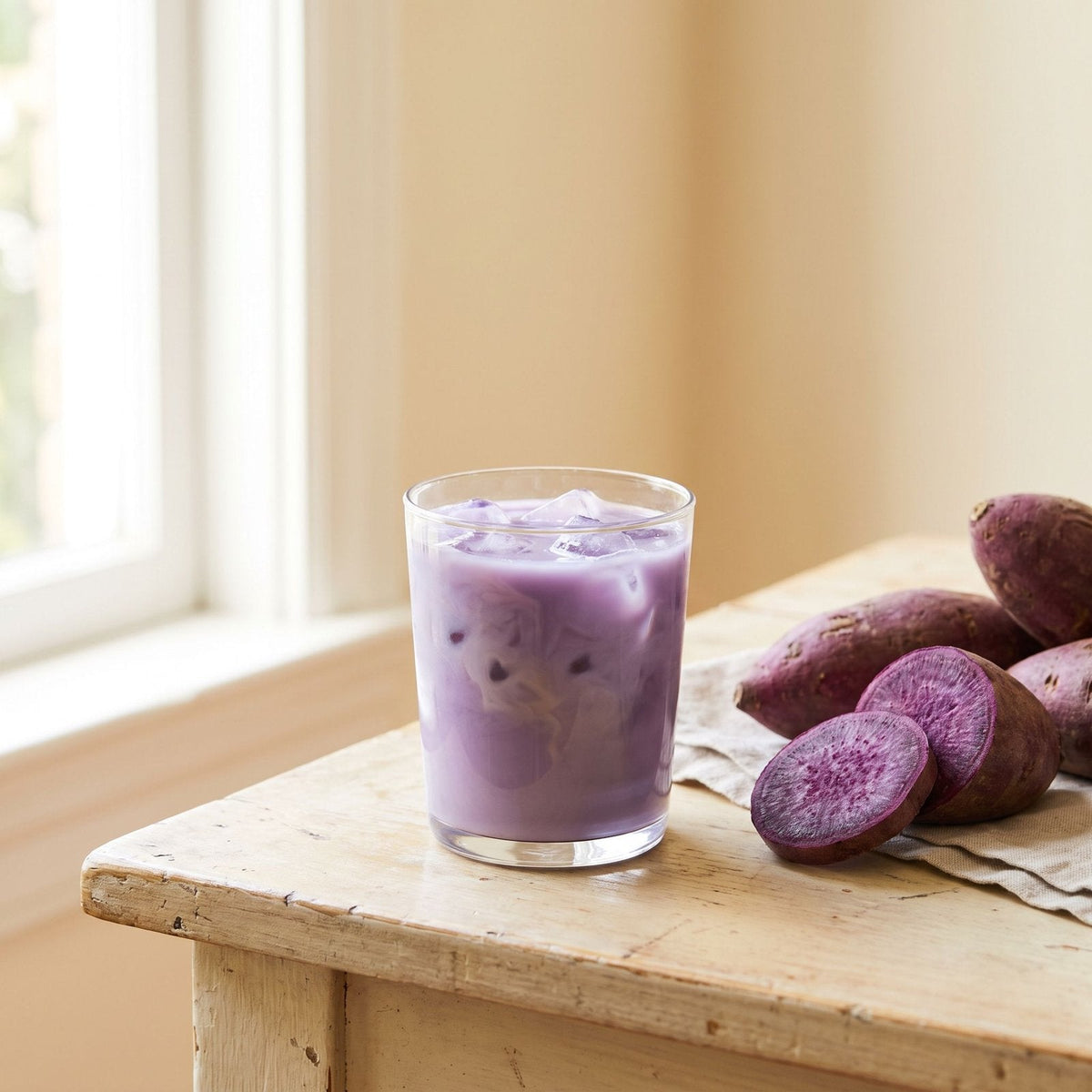
To make an ube latte at home, mix 1 to 2 teaspoons of ube powder into 50 ml of hot water, whisk until there are no lumps left, then pour in 200 ml of hot or cold milk. It takes five minutes for one cup. The drink is purple and sweet, with a taste that recalls vanilla, and it contains no caffeine.
Ingrédients for 1 person
Eggs are rounded to the nearest whole egg: beat one and keep part of it if needed.
Adjust the size of the tin to the servings, and keep an eye on the baking time if it changes.
Préparation
- Mix the ube powder
Put the powder in a bowl or at the bottom of your cup. Add the hot water in two goes: a splash first, to make a paste, then the rest. - Whisk
Whisk for about twenty seconds, with a bamboo whisk or a small electric frother, until the mixture is smooth. With some powders, fibres stay at the bottom: let it settle for a moment and pour gently if you want a silkier cup. - Heat the milk
Heat the milk over a low heat without letting it boil. If you have a frother, froth it for a few seconds. - Put it together
Pour the ube into the cup, sweeten if you like, add the vanilla, then top up with the hot milk. Taste before adding more sugar: ube is already sweet.
Conseils
Tips and variations
- No whisk or frother: shake the powder and water in a small closed jar for about twenty seconds.
- With ube purée or ube jam (halaya): use one tablespoon instead of the powder, and don't sweeten before tasting. The jam is already sweet.
- With ube extract: a few drops are enough for colour and aroma. The drink will feel lighter than with powder.
- Which milk? Oat milk gives a round cup and froths well. Coconut milk brings out the dessert side. Almond milk stays in the background and lets the taste of ube come first.
- Richer: a spoonful of thick coconut milk or a touch of sweetened condensed milk.
- Start small: one teaspoon of powder for your first cup. With too much, the drink becomes heavy. Also follow the dose on your powder's label, as it varies from one powder to another.
When to drink an ube latte?
Whenever you like. As it has no caffeine, it also works late in the day, hot in a big cup. Iced, it makes a good summer afternoon drink. If you want a morning drink with caffeine, go for a matcha latte or the ube matcha version above.
Diet
With a plant-based milk and maple syrup, the recipe is vegan. It is gluten-free if your ube powder is, and the label will tell you. With no added sweetener, the only sugars are those in the milk and the yam.
Iced ube latte: the cold version
Make the ube base as above and let it cool for a minute. Fill a tall glass with ice, pour in the cold milk, then pour the ube slowly on top. The purple sinks into the white and forms two layers. Stir just before drinking.
For an even colder drink, blend everything with the ice for a few seconds to make an ube frappé.
Ube matcha latte: the two-colour version
Purple at the bottom, green on top. This variation adds the tea taste of matcha, and its caffeine, to the vanilla notes of ube.
- Make the ube base and pour it into a tall glass filled with ice.
- Add 150 ml of cold milk.
- Whisk 2 g of matcha, or two bamboo spoons, in 50 ml of water at 70 to 75 °C, for twenty seconds in a W shape.
- Pour the matcha slowly onto the milk to keep the layers.
Choose a fairly smooth matcha so it doesn't overpower the ube. Our Organic Ceremonial Matcha is made to be drunk on its own, so it does this job well. For the proportions of a plain latte, see how to make a matcha latte.
Powder, purée or extract: which ube to choose?
Powder is the easiest for a latte: it keeps in the cupboard and you measure it with a spoon. You can also find ube as an extract, frozen and grated, or as jam.
Read the ingredients list before you buy. A pure ube powder contains only yam. Some blends add sugar, milk powder, flavourings or colouring. That doesn't make them bad, but it changes the dose, the taste and how much sugar you need to add.
The colour also depends on the product. The purple of ube comes from its natural pigments, anthocyanins, and not every powder contains as much of them. If your cup is pale, increase the dose a little before you change recipe.
We don't sell ube. Matcha is what we do. This recipe is here for people who can't decide between the two, or who want to combine them.
What does an ube latte taste like?
Ube is described as mildly sweet and slightly earthy, with notes of vanilla and hazelnut. In milk, it makes a drink close to a dessert. It is nothing like tea or coffee: if you want a tea taste, matcha is what you need. Our ube or matcha comparison goes through the differences point by point.
Four mistakes that spoil the cup
- Adding the powder to cold milk. It forms clumps that won't break up. Always use a little hot water first.
- Boiling the milk. It takes on a cooked taste that covers the vanilla notes of the ube. Turn off the heat as soon as the edge starts to simmer.
- Doubling the dose for more colour. The drink turns pasty before it turns more purple. Go up half a teaspoon at a time.
- Adding sugar out of habit. If your powder is a blend that is already sweetened, the drink will be sickly. Taste first, then decide.
Where does ube come from?
Ube is a purple yam, Dioscorea alata. Its name comes from Tagalog, the language of the Philippines, where it goes into cakes, ice cream and fritters. Its jam, ube halaya, is used in halo-halo, an iced dessert. The latte came much later, carried by its colour.
When the powder is pure, that colour has nothing to do with colouring: it comes from the pigments in the yam. That is why it is worth reading the label.
Questions fréquentes
What is an ube latte?
A milky drink flavoured with ube, a purple yam from the Philippines. It is made with ube powder, purée or extract, milk and often a little vanilla. You can drink it hot or iced.
Does an ube latte contain caffeine?
No. Ube is a yam, not a tea, so it has no caffeine. The ube matcha latte does contain some, as it includes matcha.
Are ube and taro the same thing?
No. People mix them up because both make purple drinks, but they are two different plants. Ube is a yam, Dioscorea alata. It is also confused with purple sweet potato, which belongs to yet another family.
How do you avoid lumps?
Always mix the powder into a little hot water before adding the milk. Poured straight into cold milk, it forms clumps. A small whisk or a frother deals with the rest in a few seconds.
Hot or iced: which to choose?
Hot, an ube latte is rounder and the vanilla comes through more. Iced, it is lighter and the two layers show better in the glass. The ube base is the same, so you can make both from one dose of powder by splitting it.
Do you need a matcha whisk for ube?
No, but it helps. A bamboo whisk breaks up lumps in a few seconds in a small amount of water. An electric frother, a teaspoon and some patience, or a jar you shake also do the job.
Can you make an ube latte without sugar?
Yes. Ube is already sweet, and many plant-based milks are too. Taste first, then sweeten if needed.
How many calories are in an ube latte?
There is no figure that works for every cup: it depends on the powder, the dose, the milk and the sugar. In a latte, most of the calories come from the milk and the sweetener. For rough figures by type of milk, see our page on matcha latte calories.
Can you make an ube latte in advance?
It is best to drink it as soon as it is made. The mixed powder settles at the bottom within a few minutes: if you wait, stir before drinking.
Where can you find ube powder?
In Asian grocery shops, some organic shops and online. Above all, check the ingredients, as explained above.