


Organic Ceremonial Matcha
Organic matcha from Japan, first harvest, grown in Kagoshima · 50 g, 50 cups
4.5/5262 shop reviews29,90 €per 50 g pouch · about €0.60 a cup
Smooth, with no bitterness, even on its own. In a cup or as a latte, it is ready in one minute.
- Certified organic
- Kagoshima, Japan
- No bitterness
- Ready in 1 minute
- Free delivery from €99
- Dispatched within 24 h
- 14-day returns
Order today, delivered between and .
 The taste
 The ritual
 The quality
 The origin
Any questions? A member of our team replies within 24 hours on weekdays.
Description
A ceremonial grade matcha from the first harvest, organically grown in Kagoshima, in southern Japan. Smooth even on its own, it also works in a latte or in baking.
The young leaves are shaded for about three weeks before harvest, then stone-ground. The powder is very fine and bright green, with a smooth, vegetal taste and no bitterness.
Composition and origin
Ingredient: organic green tea powder (matcha).
Origin: Kagoshima, Japan. A single origin in every pouch.
50 g pouch, about 50 cups.
Keep tightly closed, away from heat, light and moisture. Once opened, we recommend finishing it within 30 to 45 days.
Nutritional values
Per 100 ml prepared (3 g of matcha in 200 ml of water).
| Energy | 29 kJ · 7 kcal |
| Fat | 0.16 g |
| Carbohydrate | 1.19 g |
| Protein | 0.89 g |
| Salt | < 0.01 g |
Preparation
1 g of matcha: one well-filled bamboo spoon.
70 to 100 ml of water between 70 and 75 °C, never boiling.
Whisk for 20 seconds in a W shape, until you get a fine foam.
Delivery and returns
Free delivery from €99. Dispatched within 24 hours, delivered in 3 to 4 days.
14-day returns.
50 cups
per pouch
1 g per cup
one bamboo spoon
70 to 75 °C
never boiling
Certified organic
grown in Kagoshima
The taste
Ceremonial grade matcha: smooth, with no bitterness
Why it stays smooth
It comes from young tea leaves, shaded for about three weeks before harvest. Kept out of the sun, the leaf stays tender and keeps a round, almost savoury taste that the Japanese call umami. The leaves are then dried, sorted and stone-ground into a very fine powder that mixes into water without lumps.
Bitterness almost always comes from water that is too hot or from too much powder. Made with 1 g of powder and water between 70 and 75 °C, our Organic Ceremonial Matcha stays smooth, smooth enough for a first cup of matcha.
Its taste profile
- SweetnessMarked
- UmamiMedium
- VegetalMarked
- BitternessVery low
- IntensityMedium
With water : sweetness marked, umami medium, vegetal marked, bitterness very low, intensity medium. Smooth and vegetal, with a long finish.
- SweetnessVery marked
- UmamiLow
- VegetalMedium
- BitternessVery low
- IntensityLow
As a latte : sweetness very marked, umami low, vegetal medium, bitterness very low, intensity low. Milk rounds everything out; the matcha taste stays clear.
- SweetnessLow
- UmamiLow
- VegetalMarked
- BitternessMarked
- IntensityVery marked
For comparison: a culinary matcha : sweetness low, umami low, vegetal marked, bitterness marked, intensity very marked. A culinary grade, made for baking: stronger and more bitter on its own.
How to recognise ceremonial grade matcha
"Ceremonial grade" is not an official standard, and the term is not protected. It describes a matcha smooth enough to drink on its own, with water: young leaves, bright green, very fine powder. Ours ticks every line of the table. Culinary matcha is more bitter and is made for baking and sweet drinks.
Ours
Our Organic Ceremonial Matcha
A culinary matcha
Leaves
The youngest, shaded before harvest
Older, or harvested later
Colour
Bright green
Duller green, sometimes yellow
Texture
Very fine, silky powder
Coarser powder
On its own, with water
Smooth, round, vegetal
Stronger, more bitter
Best for
A cup, a latte
Cakes, sweet drinks
General guidelines, true for most matchas sold in France.
They tried it
Reviews of Organic Ceremonial Matcha
★ 4.5/5 262 shop reviews
Franchement très bon matcha, belle couleur et surtout pas du tout amer, ce qui est vraiment appréciable.
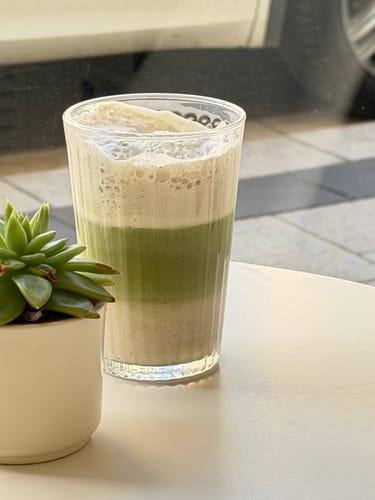
Excellent marcha, doux, sans amertume.
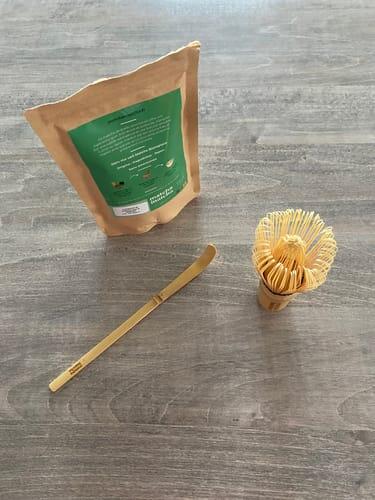
Produit très agréable et intéressant ! Le goût est nature pour moi. Pas d’amertume avec la qualité cérémonie. Le matcha me réveille bien sans nervosité dans la journée et sans effet coup de pompe. Je prends ce produit suite à mon SII et pour l’instant je tolère très bien les 1g par jour. Je suis très surpris du résultat et je recommande ce produit.
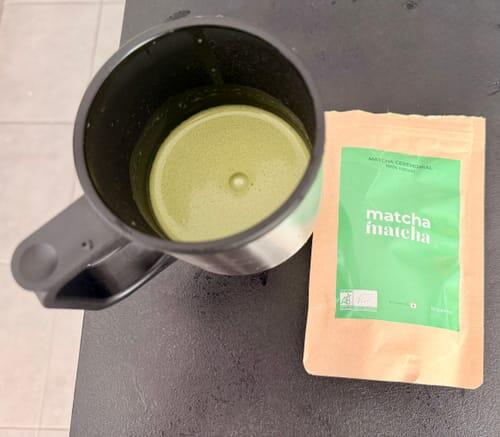
Surperbe découverte ! Très bon rapport qualité prix.
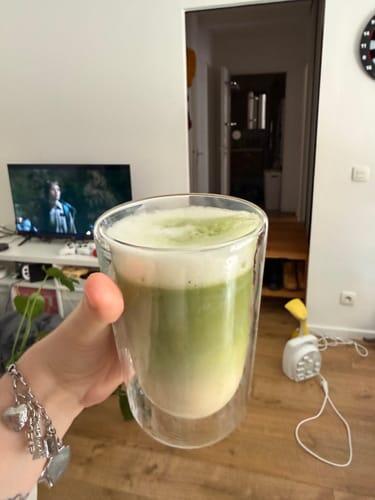
J’ai découvert le matcha cérémonie de Matcha Matcha et ça a été une révélation pour moi ! Un goût subtil, pas amer, simplement végétal et parfumé.
C’est adopté et je le recommande maintenant à mes clientes qui sont séduites aussi 😍
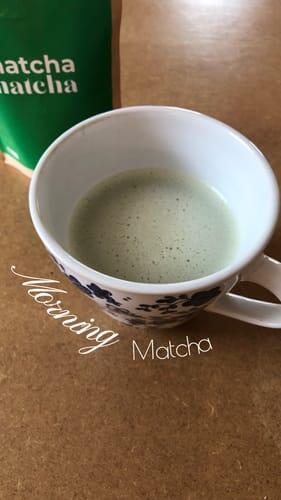
Une merveille ! Super doux, agréable de fou et pas de goût de gazon 😂
Je vais faire des économies de lait parce que pas besoin d'autant !
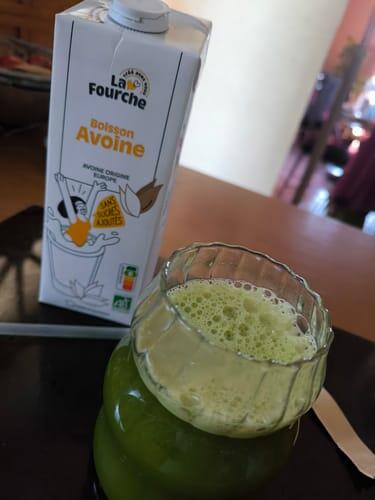
Énorme redécouverte pour moi : je n'avais pas eu une bonne expérience avec le matcha la première fois en le buvant dans un café, mais votre marque m'a réconcilié avec le matcha.
Son goût est très doux, sans amertume. Je l'ai testé en boisson et en pâtisserie et j'ai adoré les deux !
Je recommande :)
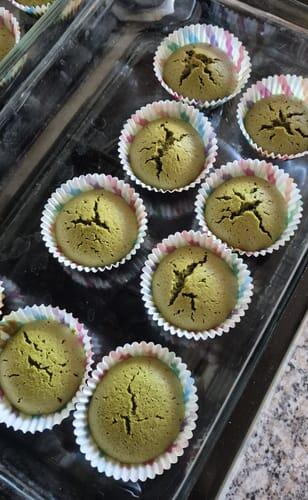
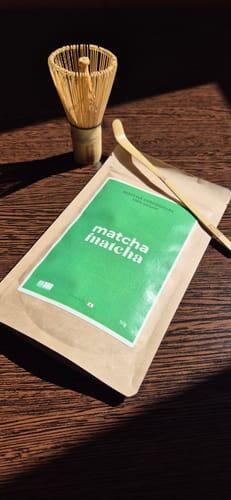
Je suis totalement satisfait, un produit de grande qualité.
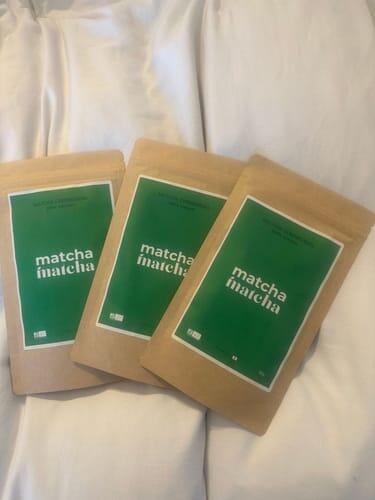
Bon matcha, mais le packaging pourrait être amélioré.
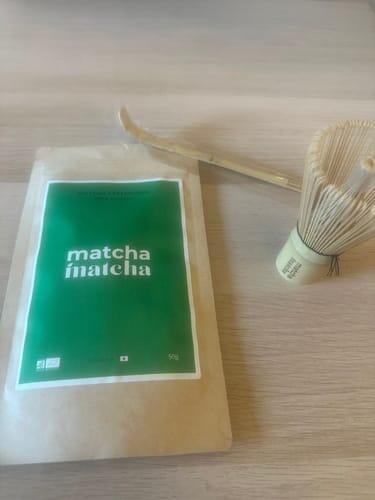
Délicieux et très frais, j'en reprendrai certainement.
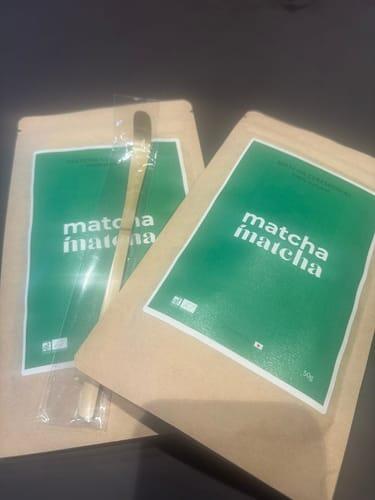
Bon produit, mais j'aurais aimé une livraison plus rapide, il est arrivé en 4 jours.
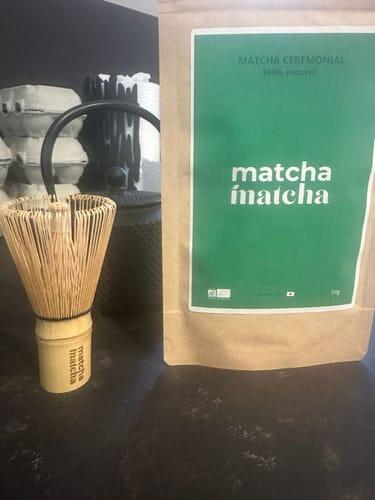
Une saveur authentique, je suis ravi de mon achat.
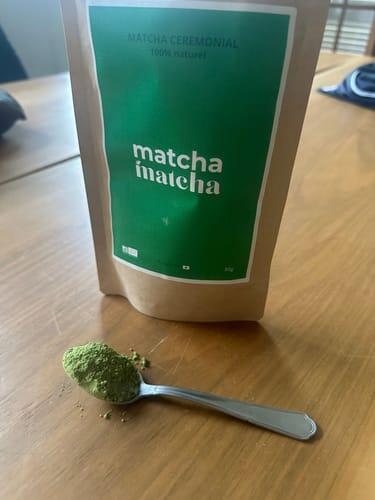
Très bon matcha, un peu cher mais ça vaut le coup.
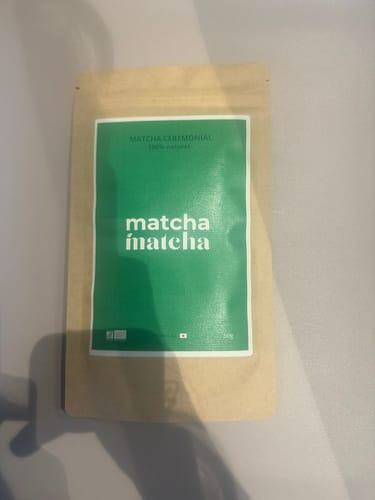
Ce matcha est incroyable, j'adore le gout et la qualité.
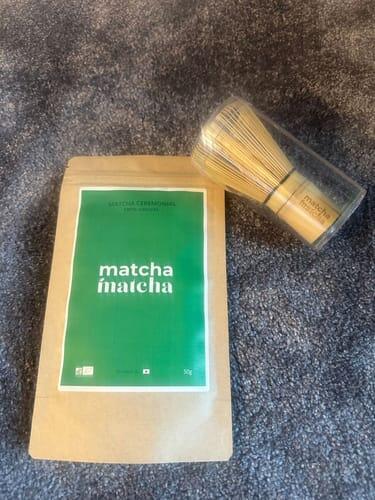
Très bon bio et sans aluminium.. voilà pourquoi je l’ai choisi pour l’instant tout va bien ;)
Un très bon rapport qualité prix ! Le goût n’est ni amer ni trop discret . Doux et satisfaisant!!
The matcha is so good! It's the first matcha I've buyed myself, but it tastes just as good as in a cute little café. Super happy with my order!
Matcha savoureux, de très bonne qualité
Excellent rapport qualité/prix
Le produite est fidèle à la description
Envoi très rapide et soigné
Je recommande vivement !!!!
Toujours aussi parfait !
Ras
Livraison rapide et matcha de qualité
Il est excellent il ne contient pas du tout d'amertume
Première commande très satisfaite du gout
livraison impeccable
et le thé délicieux
rien à dire
Thé excellent sans aucune amertume
Je recommande 😊
Matcha de super qualité et livraison rapide !
Parfait
Bon produit sans amertume. Je regrette cependant que la mousse obtenue après l'utilisaion du chasen manque de densité. Je précise que je manie l'instrument avec dextérité. :-)
Une belle découverte ce thé matcha! Après avoir testé un matcha acheté au Japon, je trouvais ceux du commerce en France vraiment inférieurs...jusqu'à ce que je goûté le thé matcha cérémonie de Matcha Matcha.
Il n'est pas amer, il a une belle couleur , il se mélange bien aux liquides et à une saveur vraiment agréable. Et bien sûr il bient du Japon, ce qui permet d'avoir un thé bien moins pollué en métaux lourds que les équivalents chinois!
Super matcha mes clients l adore !
Origin
Where does our matcha come from? Kagoshima, in southern Japan
Our Organic Ceremonial Matcha is grown in Kagoshima, the southernmost prefecture of Kyūshū island and one of Japan's main tea regions. Five things make the difference there, and you can taste each one.
-
A mild climate
Southern Kyūshū has mild winters and a long growing season. The tea bushes grow steadily there, with no cold snaps in spring.
In the cup: a tender leaf, a round taste.
-
Volcanic soils
Facing the city, the Sakurajima volcano still smokes. The soils of the region are light and drain well, so no water stands at the foot of the tea bushes.
In the cup: a clear green colour.
-
An early spring
The spring harvest starts earlier than elsewhere in Japan. The young leaves grow quickly in the mild weather.
In the cup: the freshness of young leaves.
-
Shaded tea bushes
About three weeks before harvest, the tea bushes are covered. In the shade, the leaf stays thin and turns a deeper green.
In the cup: a round taste, with no bitterness.
-
Organic farming
Our matcha is certified organic: it is grown without synthetic pesticides, to the European organic standard. It is a first harvest matcha, tested in a laboratory.
In the cup: the taste of the leaf, nothing else.
Preparation
How to make Organic Ceremonial Matcha
It takes one minute. You don't need to know anything about matcha: a cup, hot water, and it is ready.
-
Measure 1 g
One well-filled bamboo spoon, which is about 1 g. Sift the powder into the cup to avoid lumps.
-
Pour in 70 to 100 ml of water between 70 and 75 °C
Never boiling. If you have no thermometer, let the water stand for 5 minutes after it boils, or mix two thirds boiling water with one third cold water.
-
Whisk for 20 seconds in a W shape
Move your wrist quickly, in a W shape and not in circles, until you get a fine foam. No whisk yet? A small milk frother will do for now.

Uses
In a cup, as a latte or in baking
One pouch makes 50 cups or 25 lattes. Here is how our team drinks it.

In a cup
1 g · 70 to 100 ml of water at 70-75 °C
The pure taste, in the morning or early afternoon. This is where the smoothness of Kagoshima comes through best.

In a latte
2 g · 30 ml of water · 150 ml of milk
Two bamboo spoons of matcha whisked in a little water, then the milk, hot or cold. The matcha taste stays clear.

In baking
Loaf cakes, financiers, creams
For recipes where the matcha has to keep its colour and taste, without the bitterness of a culinary grade.
The price
How much does a cup of ceremonial matcha cost?
A 50 g pouch makes 50 cups of 1 g: about €0.60 a cup. Always compare per gram: it is the only figure that does not depend on the stated dose, which ranges from 1 to 2 g depending on the brand. A latte, at 2 g, comes to about €1.20 of matcha.
| Option | Price | Per 1 g cup |
|---|---|---|
| 1 pouch · 50 g | €29.90 | about €0.60 |
| 2 pouches · 100 g | €59.80 | about €0.60 |
| Subscription −10% | €26.91 per pouch | about €0.54 |
Why is the price so low for a ceremonial matcha?
We sell one matcha from Japan, in a soft 50 g pouch rather than a metal tin. What we don't spend on packaging, you don't pay for. The result is one of the lowest prices per gram among premium brands.
How many pouches for you?
- Matcha per month
- One pouch lasts you
- Recommended option
No commitment · stop whenever you like
Proof
Certified organic matcha, tested in a laboratory
What you drink is checked twice: by the body that certifies it as organic, and by a laboratory that tests our matcha.
Organic
Certified organic
Non-EU agriculture, under European Regulation (EU) 2018/848. The certificate is in our company's name.
Freshness
Keeps for 24 months
With the pouch unopened, away from light. Once opened, we recommend finishing it within 30 to 45 days.
Lab tests
Lab tested
A laboratory tests it for pesticides, heavy metals and PAHs.
Origin
Kagoshima, Japan
A single origin in every pouch.
A first harvest matcha that keeps for 24 months unopened.
In the cup
What is in a cup
A cup is 1 g of ground tea leaf and water. The ingredient list fits on one line: organic matcha green tea. You drink the whole leaf, so you get all of its taste.
Matcha naturally contains caffeine. If you are sensitive to it, drink it in the morning or early afternoon, and count the coffee or tea you already drink.
Nutritional values
Per 100 ml prepared
Energy
29 kJ · 7 kcal
Fat
0.16 g
Carbohydrate
1.19 g
Protein
0.89 g
Salt
< 0.01 g
Values given as measured, based on 3 g of matcha in 200 ml of water.

The founder
A word from Alex, founder
"I spent a long time looking for a matcha you could drink on its own, with water, with nothing to hide the bitterness. I found it in Kagoshima. It is the only matcha from Japan that we sell."
Alex, founder of Matcha Matcha
To make it
The whisk and spoon that go with it
A fine foam and the right dose in every cup. Added to a pouch, they travel in the same parcel, and the spoon is free from €50.
-
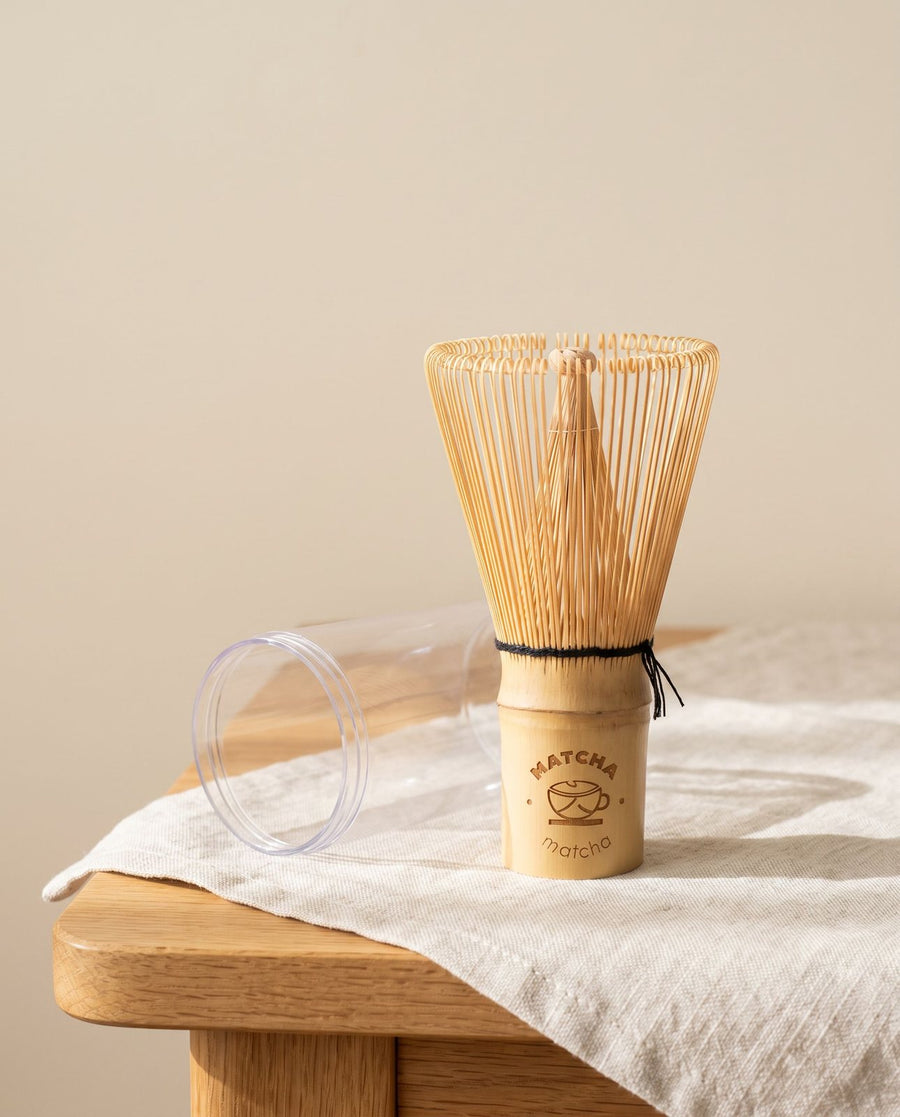
A fine foam in 20 seconds
Bamboo matcha whisk (chasen)
It whisks the matcha into a creamy foam with no lumps. Looked after well, it lasts about two years.
14,90 €
-
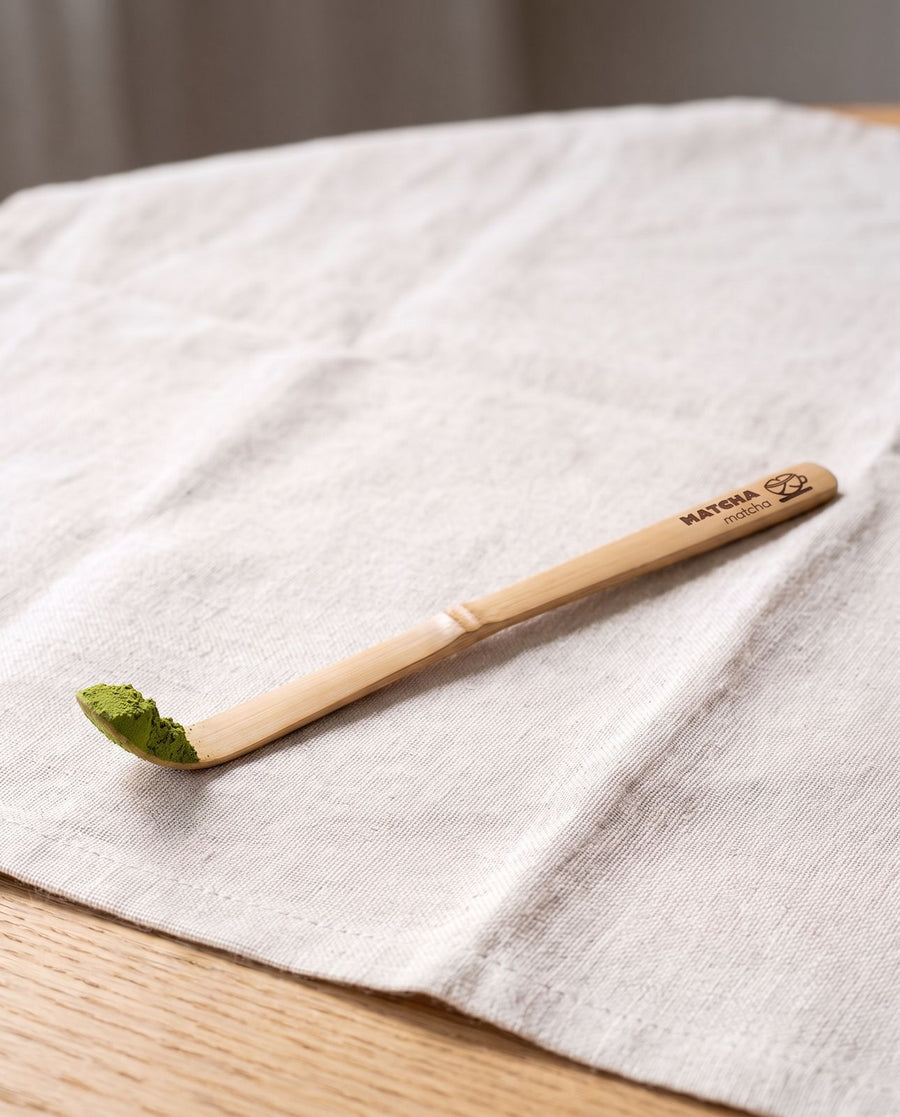
The right dose, without scales
Bamboo matcha spoon
One well-filled spoon is about 1 g: one cup, with the same taste every time.
4,90 €
-
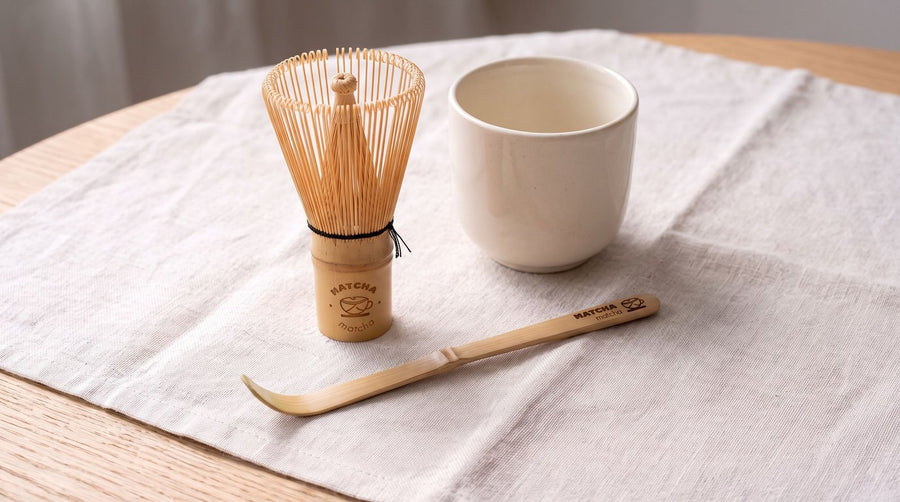
The two tools for making your matcha
Ritual Pack
The whisk and the spoon together, for 9% less than the two bought separately.
17,90 €
Starting from scratch? The Matcha Kit brings together the pouch, the whisk and the spoon for €44.90, 9% less than the three bought separately.
Discover the Matcha KitYour questions
Frequently asked questions about Organic Ceremonial Matcha
Another question? A member of our team replies within 24 hours.
What is ceremonial grade matcha?
Ceremonial grade is not an official standard: no Japanese or European text defines the term. For us, it means a matcha made from young leaves, shaded before harvest and ground very finely, smooth enough to drink on its own, with water and no milk. Our Organic Ceremonial Matcha, grown in Kagoshima, is one.
How do you recognise ceremonial grade matcha?
Look at the colour, which should be bright green, and at the powder, so fine that it forms no lumps. Taste it with water between 70 and 75 °C: it should stay smooth. A named origin, organic certification and lab tests are good signs. Our Organic Ceremonial Matcha meets each of these points.
How much does ceremonial matcha cost?
Compare per gram: it is the only honest figure. Ours comes to €0.60 per gram, so about €0.60 a cup, against an average of €1.08 for four premium organic matchas sold in France, checked on 23/10/2026. The 50 g pouch costs €29.90, or €26.91 on subscription.
Why is it cheaper than other ceremonial matchas?
We sell one matcha from Japan, in a soft 50 g pouch rather than a metal tin. What we don't spend on packaging, you don't pay for. The quality stays the same: first harvest, organically grown in Kagoshima and lab tested.
How does the subscription work?
You choose a delivery every month or every two months, and you pay €26.91 per pouch, 10% less than a one-off purchase. Free delivery from €99. There is no commitment: you can stop the subscription whenever you like from your account.
Do I need any equipment to make it?
A cup and hot water are enough to start. The bamboo whisk gives the finest foam in 20 seconds, and the bamboo spoon measures 1 g without scales. You can add both to your pouch further up this page.
What if I don't like the taste?
Write to us: a member of our team replies within 24 hours. Most of the time, slightly cooler water or a lighter dose changes everything. An unopened pouch can be returned to us within 14 days.
Where does your matcha come from?
From Kagoshima, the southernmost prefecture of Kyūshū island, in Japan. The climate is mild, the soils are volcanic and spring comes early, which gives tender leaves. Our matcha is certified organic and lab tested: the details are in the organic section.
Why are some matchas bitter?
Three reasons come up almost every time: water that is too hot, too much powder, or a culinary matcha drunk on its own. Above 80 °C, the water brings out the bitterness of the leaf. Made with 1 g of powder and 70 to 100 ml of water between 70 and 75 °C, our Organic Ceremonial Matcha stays smooth.
How much matcha for one cup?
Allow 1 g of matcha per cup, in 70 to 100 ml of water between 70 and 75 °C. For a latte, double the dose: 2 g. Without kitchen scales, the simplest way to get the same taste from one cup to the next is a bamboo spoon, which holds about 1 g.
How many cups in a 50 g pouch?
50 cups, at 1 g per cup, or 25 lattes at 2 g. Once opened, a pouch is best enjoyed within 30 to 45 days. The pouch costs €29.90, which is about €0.60 a cup. Free delivery from €99.
With water or as a latte?
Both. On its own, with water, it shows its full taste: smooth, vegetal, with no bitterness. For a latte, whisk 2 g into 30 ml of water at 70 °C, then add 150 ml of hot or cold milk, dairy or plant-based. For an iced version, pour it over ice.
How do you store matcha once opened?
Close the pouch tightly after each use, pressing out the air, and keep it somewhere cool, away from light and smells. The fridge is fine if the pouch stays tightly closed. Unopened, it keeps for 24 months. Once opened, we recommend finishing it within 30 to 45 days.