


What does matcha taste like?
Less grassy than you might fear.
Matcha tastes vegetal and smooth, with an umami note and sometimes a slight bitterness in the aftertaste. If yours tasted really bitter, the cause is almost always the water, the dose or the powder, and it can be fixed.
By the Matcha Matcha team · updated November 2026 · 9 min read

Why is my matcha bitter?
What went wrong with your matcha?
An unpleasantly bitter matcha usually comes from water that is too hot, too much powder or an oxidised powder. The slight bitterness you sometimes notice in the aftertaste fades quickly. The kind that lingers and makes you wince has a cause.

Likely cause
Water that is too hot
Above 80 °C, the bitterness comes out, even with a very good powder. This is the most common cause, and the easiest to fix.
What to change
Aim for 70 to 75 °C. Without a thermometer: two thirds boiling water, one third cold water.

Likely cause
Too much powder
Adding more powder feels like the right thing to do. But the taste gets concentrated, the vegetal note takes over and the aftertaste turns harsh.
What to change
1 g for 70 to 100 ml, which is one level bamboo spoon. Only double it for a latte.

Likely cause
Culinary grade drunk on its own
It is made for baking: with water alone, it is strong and bitter. Many people judge matcha for good on that pouch.
What to change
Keep it for cakes. For a cup made with water, choose a ceremonial grade powder.
fresh
oxidised
Likely cause
Oxidised powder
Open for a long time, or kept in the light or the heat, it turns yellow and loses its flavour. It then smells of hay or old cardboard.
What to change
If it has turned yellow or smells of hay, keep it for a cake and start again with fresh powder. Once opened, a well-sealed pouch keeps for 30 to 45 days.

Likely cause
Not whisked enough
Lumps stay at the bottom and burst in your mouth. They cause those harsh sips when the rest of the cup is good.
What to change
Sift the powder, then whisk for 20 seconds in a W shape.
Send this page to the person who made you your first matcha.
Depending on what you usually drink
A green tea drinker and an espresso drinker do not taste the same drink. Start from what you know.

You drink tea
- What you will recognise
- The green side of a sencha, but denser. You drink the whole leaf, not an infusion of it, so everything comes through more.
- What will surprise you
- The roundness: a broth-like note, almost salty, that few brewed teas give to this degree. And a texture that coats your mouth.
- Our tip
- Start with water, no sugar. Your palate is already used to this.

You drink coffee
- What you will recognise
- Not much, and that is normal. Coffee is roasted, matcha is vegetal. You keep the ritual of the small cup, without the roasted smell.
- What will surprise you
- The bitterness is not the one you know. Coffee's is roasted and long. Matcha's is green and shorter.
- Our tip
- Try a lightly sweetened latte before you try it with water.

You prefer lattes
- What you will recognise
- The softness of the milk and its foam. The matcha comes on top with a note of fresh grass, where coffee would bring something roasted.
- What will surprise you
- If you know the very sweet versions from the big coffee chains, this one is more vegetal. You decide how much sugar goes in.
- Our tip
- Keep the milk you use in your coffee: the comparison will tell you more.
Matcha taste in a few words
A sip has four stages: a vegetal, grassy start, a round umami middle, a creamy texture, then a smooth end where a slight bitterness sometimes comes through.
The start
Vegetal and fresh
Fresh grass, young spinach. This is the note that surprises people most at first.
The middle
Umami
A roundness that is almost salty, like a light broth.
The texture
Creamy
The powder stays suspended in the water, and a fine foam softens the first contact.
The end
Smooth, sometimes slightly bitter
The slight bitterness fades quickly and leaves a smooth taste in your mouth.
A rough guide to the order of sensations, not a measurement.
Umami: what it tastes like
Umami is a Japanese word for the fifth taste, alongside sweet, salty, sour and bitter. You know it without naming it: broth, parmesan, mushrooms. In matcha, it gives that feeling of roundness. It is stronger in well-shaded powders, and it is also what sometimes reminds people of the sea.
Vegetal, smooth, slightly bitter
You are drinking a green leaf that has not been roasted, which is why it tastes vegetal. A good powder, well prepared, stays soft, which is why it tastes smooth. A little bite can remain: you notice it, but it doesn't make you wince.
What to expect from your first cup
It is hot, green and thicker than tea. The foam reaches your lips first, then the vegetal taste, quite strong for a second or two. You may wonder whether it is supposed to taste like that. It is. What matters comes just after: if your mouth feels soft and the end is smooth, the cup is a success. If you are still wincing ten seconds later, the diagnosis at the top of the page has the answer.
Vegetal, yes. Mown lawn, no.
A taste of fish, spinach or hay: normal or not?
A marine or spinach note is normal. Hay, dust and old cardboard are signs of a powder that has lost its freshness.
Normal
Spinach, fresh grass
This is the vegetal signature of green tea. It calms down with a little more water.
Normal
Seaweed, broth, a marine note
This is umami, stronger in heavily shaded matcha and in some cultivars. At 1 g, it softens.
To adjust
Fish
A hint of the sea is fine. A real smell of fish is not the taste you should get: go down to 1 g and, if it stays, switch to another powder.
To adjust
Mown lawn, grass that scratches the throat
Most often, too much powder or water that is too hot. Go back to 1 g and 70 to 75 °C.
Not normal
Hay
The powder is oxidised and its freshness has gone. At this stage it will no longer be good in a cup: keep it for a cake.
Not normal
Dust, old cardboard
Same diagnosis, often with a colour that is turning yellow. A forgotten pouch always ends up like this.
The ten-second test. Open the pouch. Bright green with a fresh smell: all is well. Yellowish green with a smell of hay: use it for baking.
Taste in three steps
- Smell the cupBefore you drink: fresh grass, a little broth. If it smells of hay, you already know.
- Hold the first sipKeep it in your mouth for a second, long enough for the vegetal note to let the umami through.
- Wait for the endMatcha changes once you swallow. That is when you will know whether it is smooth.
How to tell if you like matcha
It can take a few cups to get used to it. If you don't like matcha on its own, try it as a latte before you decide.
Let's be honest: some matcha is plain bad, and some people will never like it. Those who call it "disgusting" have often drunk a cooking powder made with water that was too hot. Others simply don't like vegetal flavours, and that is up to them. Those who love it usually talk about that same taste, the one that surprised them at first.
Most people judge on the first sip, and it is the least typical one. It lands on a palate that expected tea or coffee and finds neither.
Make another one on a different day, with the same settings. The palate soon gets used to a note it did not know, as it did with coffee or dark chocolate the first time.
If you don't like matcha on its own
Start at the mildest end, and go up a step when you like the one before. You don't have to go all the way to the top.
Step 1
A matcha dessert
Sugar and butter round everything off. It is the easiest way in.
Step 2
A sweetened latte
2 g, which is one small teaspoon, with milk and a little sugar.
Step 3
A plain latte
The same 2 g, without sugar. The vegetal note comes out and the milk keeps it round.
Step 4
A lighter cup
1 g in 100 ml at 70-75 °C, hot or iced. The green note is less noticeable.
Step 5
The classic cup
Usucha: 1 g in 70 ml, whisked to a foam. The full flavour.
Mildest
Most intense
Above that there is koicha, a very thick matcha for regular drinkers and very high grade powders. There is no hurry. As for pairings, sweet and rich foods suit it well: butter shortbread, white chocolate, red berries.
And if none of it works for you, never mind, it happens. Hojicha, a roasted Japanese tea with a toasted taste, often suits people who are put off by the vegetal side.

What makes a matcha smooth
You can taste four things in the cup. Three are decided before you open the pouch, the last one at home.
More roundness: shadingBefore harvest, the tea bushes are covered with shade cloths. The leaf becomes greener and its taste smoother.
Less bite: first harvestThe young spring leaves are the most tender. The younger the leaf and the slower the stone mill, the smoother the cup.
A cup made for water: the gradeCeremonial grade is made to be drunk on its own, and it is still good in a latte or iced. Culinary grade stands up to sugar and baking, which makes it a poor choice for the cup.
A clean taste: freshnessKept away from light and heat and well sealed, an opened pouch is best drunk within 30 to 45 days.
Our Organic Ceremonial Matcha is a first harvest from Kagoshima. At 1 g and 70-75 °C, it stays smooth and vegetal. In the cup: fresh vegetal notes, soft umami, a hint of hazelnut and a creamy finish.
Your first cup
Start from what you already drink. One well-made cup will tell you more than ten articles.
With water, nothing else
You know tea, so go straight to the taste. Use a wide cup and drink it straight away, because the powder settles quickly.
1 gof matcha, one level bamboo spoon
70 to 100 mlof water
70 to 75 °Cnever boiling
20 secondsof whisking, in a W shape
A latte, lightly sweetened
Water alone may confuse you at first. Milk connects it to what you like in a milky coffee.
2 gof matcha, one small teaspoon
A splashof water at 70-75 °C to mix the powder
Milkhot or cold, frothed if you can
A little sugarto start with, then adjust
Your usual latte, with matcha
Change only one thing: keep your own milk. You will know straight away what the matcha brings.
2 gof matcha, one small teaspoon
A splashof water at 70-75 °C to mix the powder
Your milkthe one you already use
Sugaras usual, then a little less
4.5/5262 shop reviews
"A subtle taste, not bitter, simply vegetal and fragrant."
Tamara D., 19/09/2025
All that's left is a good powder. If you already have a whisk or a milk frother, take the pouch. If you are starting from scratch, take the Kit.
-
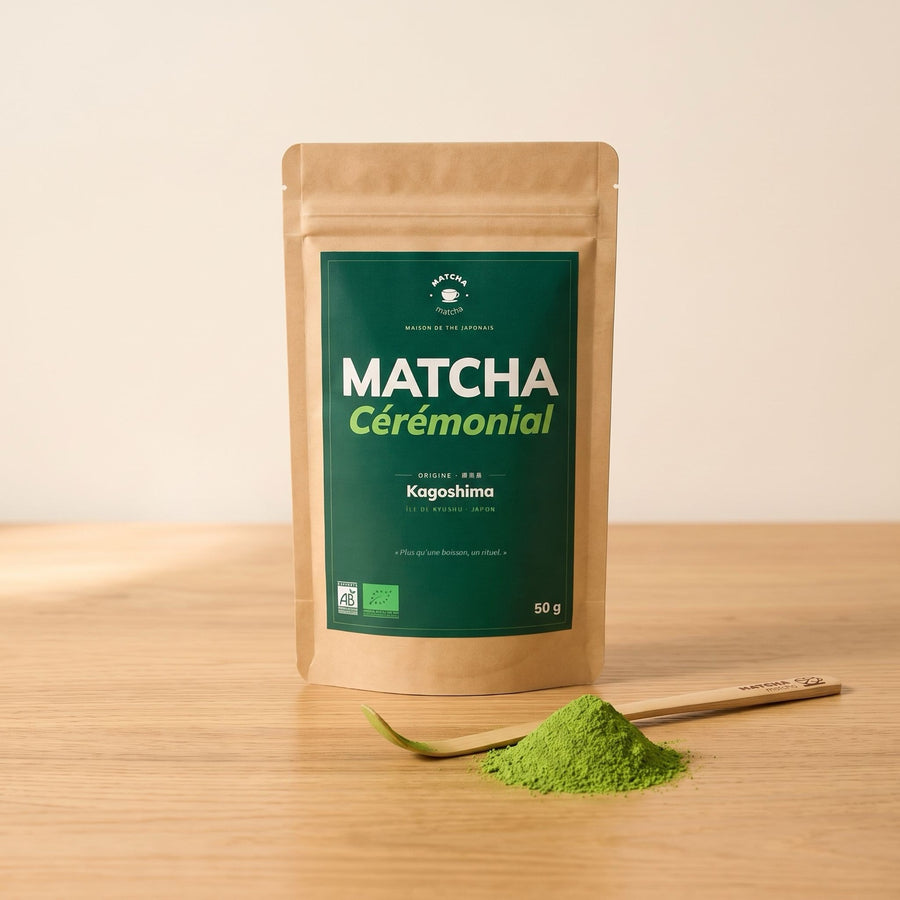 OrganicKagoshima, Japan
Organic Ceremonial Matcha
A smooth, vegetal matcha, to drink with water or as a latte.
29,90 € · about €0.60 a cup, €1.20 of matcha per latte
-
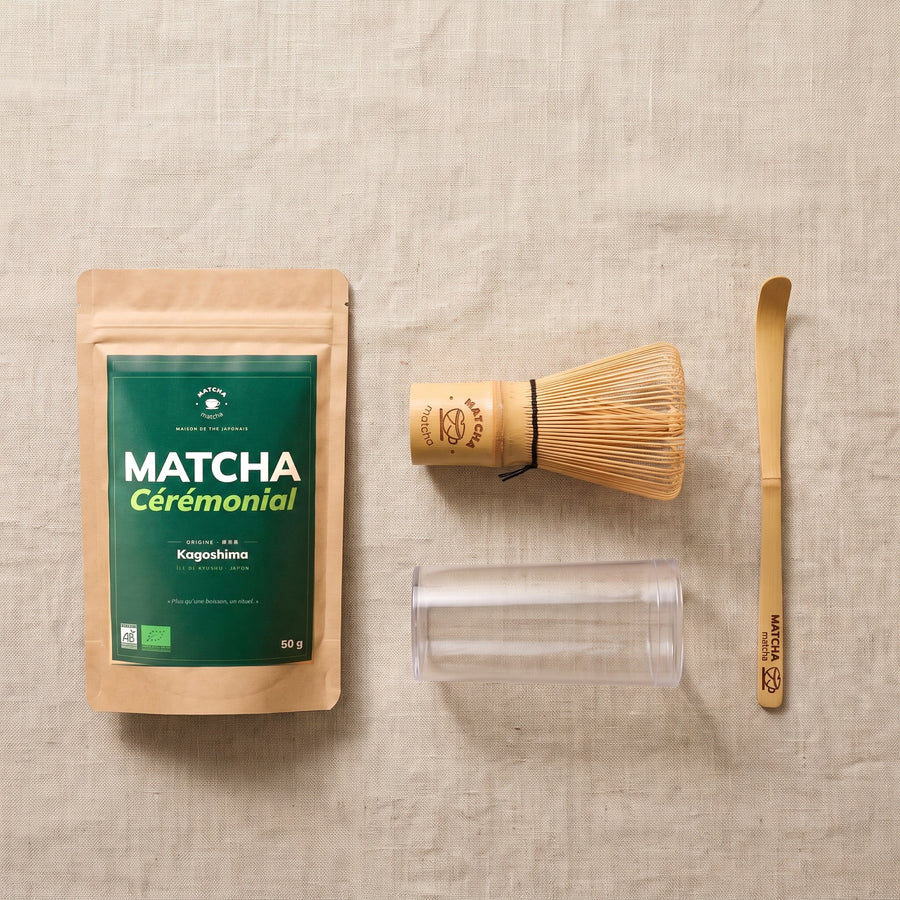 Getting started
Matcha Kit
The matcha, the bamboo matcha whisk (chasen) and the spoon, in one parcel.
44,90 € · 9% cheaper than buying the three separately
What does a matcha latte taste like?
Like a softer matcha: vegetal and round, with a note of fresh grass that the milk makes creamy.
The milk changes a lot. Whole milk and barista oat milk give the tightest foam. Oat adds a cereal note, soya milk leaves more room for the tea and coconut milk tastes sweeter. The more milk you use, the more the matcha fades into the background: to taste it more, keep 2 g and use less milk. Served iced, it often tastes fresher and lighter.
What about the "vanilla matcha" you keep seeing? Matcha has no vanilla taste of its own. When there is one, it comes from a syrup or an added flavouring, and nothing stops you adding some at home.
Matcha flavour in desserts
It often comes from a culinary grade, chosen because it holds up to baking and to sugar. What you taste is a green tea note rounded off by butter or milk, sometimes with added flavourings: the ingredients list will tell you. So a matcha ice cream you enjoyed does not mean you will enjoy a cup made with water, and the reverse is true too. To find out whether you like matcha itself, taste it at least once in a simple drink, with water or milk, without syrup.
