


How to make matcha without a whisk
To make matcha without a whisk, sift 1 g of matcha and mix it into a little water at 70 to 75 °C. Then stir it with a milk frother or a small kitchen whisk before you add the rest of the water. Your matcha will taste good, with less foam than with a bamboo whisk.
By the Matcha Matcha team · updated November 2026 · 4 min read

Can you make matcha tea without a whisk?
Yes. A milk frother, a small kitchen whisk or a shaker is enough to mix 1 g of matcha without lumps.
The bamboo whisk is mainly there to make a fine foam. The taste comes from the powder, the dose and the water temperature, and none of these change. Keep the same guidelines: 1 g of matcha, which is half a level teaspoon, and 70 to 100 ml of water at 70 to 75 °C. No powder yet? Here is where to buy the best matcha powder.
What do you have to hand?
Milk frother

- Put 1 g of matcha in a cup, sifted if you can.
- Add a little water at 70 to 75 °C.
- Run the frother for 15 seconds, first at the bottom, then near the surface.
- Top up to 70 to 100 ml of hot water.
What you get: a cup with no lumps and a foam with bigger bubbles.
Illustrative image of the method.
Small kitchen whisk

- Sift 1 g of matcha into a wide cup.
- Pour in a little water at 70 to 75 °C and press the powder into a paste.
- Add the rest of the water.
- Whisk hard for 30 seconds.
What you get: a decent mix, with little foam.
Illustrative image of the method.
Shaker or jar

- Put 1 g of matcha in the container.
- Add a little cold water and close the lid tightly.
- Shake for 15 seconds.
- Pour into the cup and top up with hot or cool water.
What you get: a well-mixed drink with big bubbles.
Illustrative image of the method.
Which method should you choose?
The milk frother is the easiest option for a hot cup. The shaker works well for a cold drink.
| Method | What you need | What you get |
|---|---|---|
| Electric milk frother | A cup and a battery frother | A cup with no lumps and a foam with bigger bubbles |
| Small kitchen whisk | A wide cup | A decent mix, little foam, takes a bit longer |
| Shaker or small closed jar | A sealed container and cold water | A well-mixed cold drink with big bubbles |
| For comparison: bamboo whisk | A matcha whisk (chasen) | A fine, dense foam in 20 seconds |
Be careful with the shaker. Shaking hot water in a closed container builds up pressure, and the water can spray out when you open it. Shake 1 g of matcha with a little cold water, then add the hot water in the cup.
Avoid stirring with a spoon on its own, too. It nearly always leaves lumps.
You don't need an expensive frother. A small handheld model, battery-powered or USB-rechargeable, is enough for 1 g of matcha. Power varies from one model to another, so watch the cup rather than the clock: stop when you can no longer see any powder.
Hand blender, blender, fork: are they any good for one cup?
A fork will do in a pinch. A hand blender or a blender only makes sense for several cups.
A blender is designed for larger volumes. In 100 ml, the blades of a large jug barely stir the bottom. A mini blender does better, depending on its size. A hand blender needs a tall, narrow container, or the liquid splashes up the sides.


One precaution with a blender: never put hot water in a closed jug. The pressure pushes the lid up, just as in a shaker.
The fork is the last resort, but it does better than a spoon. Its prongs break up the lumps that the back of a spoon only pushes around. Put the matcha in a little water, press it against the side of the cup until you get a smooth paste, then add water bit by bit. A few lumps may remain, and you will get almost no foam.

Without a whisk, your matcha still tastes very good. What you miss is the fine foam that the bamboo prongs make.
If you feel like trying one, you can order the whisk on its own, or with everything else in the Matcha Kit.
-
 Getting started
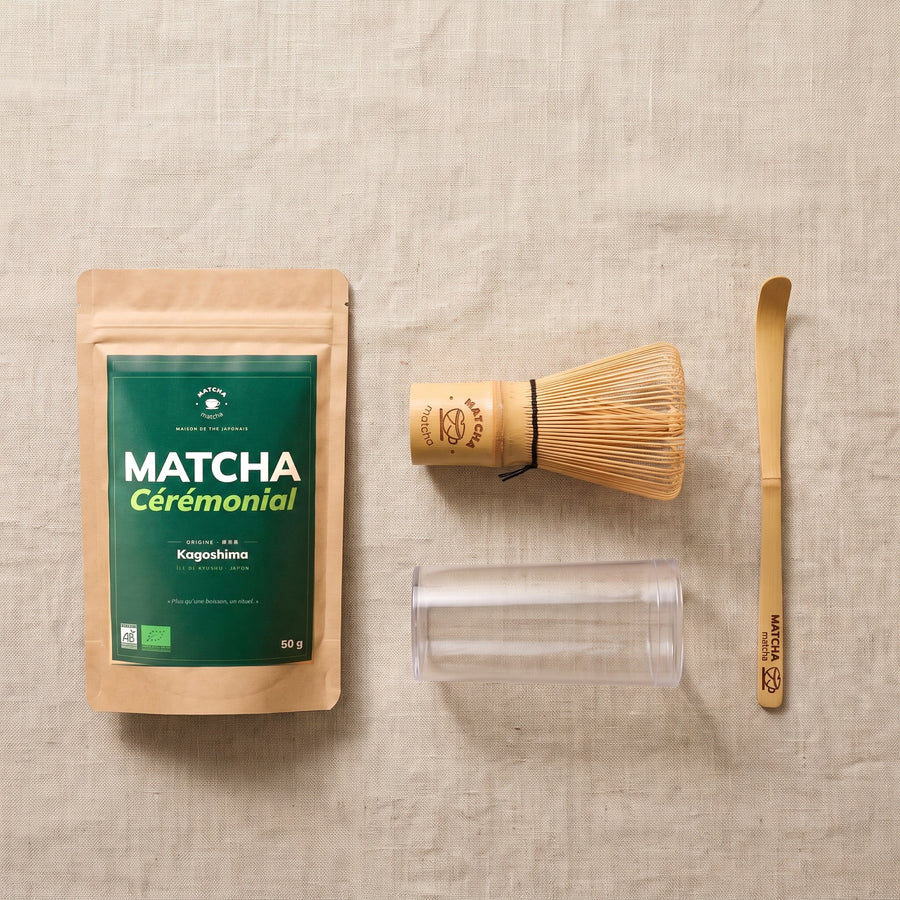
Matcha Kit
Everything for your first cup: the matcha, the bamboo matcha whisk (chasen) and the spoon.
44,90 € · 9% cheaper than buying the three separately
-
 Whisk
How do you avoid lumps without a whisk?
Sift the powder, then mix it into a little water first.
Matcha powder is so fine that it forms small lumps. Without the whisk's prongs to break them up, the sieve does that job: a small strainer held over the cup is enough. Then pour in one or two tablespoons of water, press the powder into a smooth paste, and add the rest of the water. You can skip the sieve if you use a frother, but the paste at the start still helps.
What a bamboo whisk really changes
The foam: finer, denser, and made in twenty seconds.
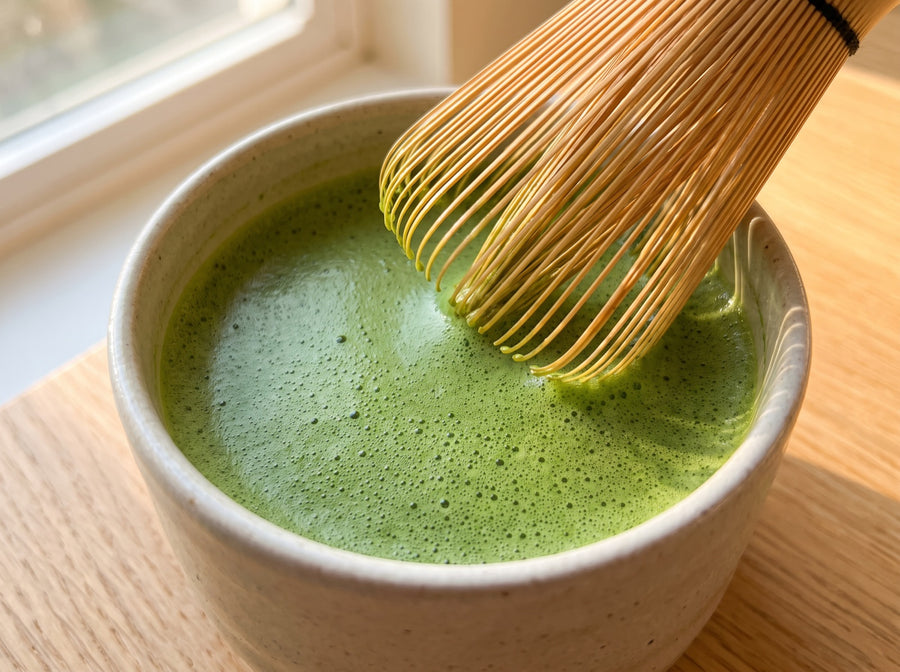
The very thin prongs of a bamboo matcha whisk (chasen) break up the powder and trap air better than a kitchen utensil. Your bubbles stay tiny because its 100 prongs pass through all the liquid with each stroke, while a kitchen whisk has only a few wires. And soft bamboo doesn't scrape the cup the way metal does. This foam makes the first sip smoother, and that is the only real change. If you drink matcha now and then, a frother will do. If you drink it often, the bamboo matcha whisk (chasen) soon becomes the simplest way.
For the full cup, here is how to make matcha with a whisk. And for the milky version, a matcha latte without a whisk works very well with a frother.
Three mistakes that spoil a cup made without a whisk
The first is boiling water. It makes the taste harsher and you lose that smooth, vegetal side. If you have no thermometer, pour two thirds boiling water and one third cold water: that puts you in the right range.
The second is too much powder. Without the whisk's prongs to spread it, 2 g in a small cup makes a thick mix where the lumps stay. Stick to 1 g.
The third is pouring in all the water at once. The powder floats, forms lumps, and stirring struggles to catch up. Start with a little water, mix, then top up.
Frequently asked questions
Can you make matcha without a chasen?
Yes. A milk frother or a small kitchen whisk gives a well-mixed cup. You will get less foam, with bigger bubbles.
What can you use instead of a matcha whisk?
An electric milk frother is the easiest replacement. Next comes the small kitchen whisk, and the shaker for a cold drink.
Does an electric whisk work?
A small milk frother, yes. A kitchen mixer is too powerful for a single cup and sprays the liquid everywhere.
Why does matcha need foam?
The foam makes the first sip smoother and the cup creamier. Without it, matcha is still good, with a flatter texture.
How long should you mix matcha without a whisk?
Until there are no lumps of powder left. The 15 and 30 seconds in the steps are starting points: a powerful frother will be quicker, and a small kitchen whisk sometimes needs longer.
Can you use a blender for matcha?
Yes, but it is not the most practical choice for one cup: a large jug doesn't mix such a small volume well.
Does matcha dissolve in cold water?
Not really, in cold water or in hot: matcha is a powder made of leaves, and it stays in suspension. For a cold drink, shake it in a closed jar with a little water. With a spoon, it forms lumps.
What is the cheapest utensil to replace a whisk?
A jar with a lid, which you probably already have. It mixes 1 g of matcha into a little cold water.
Does the taste change without a whisk?
The taste still depends on your powder, your dose and the water temperature: an Organic Ceremonial Matcha from Kagoshima keeps its smooth, vegetal profile. The texture does change: bigger bubbles, sometimes no foam, so a less creamy first sip.
Which container should you use to make matcha without a whisk?
With a frother, use a mug with high sides so any splashes stay in the cup. With a small kitchen whisk, choose a wide cup to leave room for the movement. With a shaker or a jar, stick to cold water and only fill it halfway.
Should you add the water or the powder first?
The powder first, then a little water. Poured onto a lot of water, the powder floats on the surface and forms lumps that are hard to break up. Once the paste is smooth, add the rest.
How do you clean a milk frother after matcha?
Run it for a few seconds in a glass of clean water, then rinse the head and let it air-dry. Dry powder quickly sticks to the coil, so it's best to do this straight after your cup.
Can you make matcha without a whisk in advance?
It's better to drink it straight away. As the powder doesn't dissolve, it ends up settling at the bottom.
How do you measure matcha without scales?
Half a level teaspoon is 1 g, for 70 to 100 ml of water. A heaped spoon holds a lot more.
For your next cup
-
Getting started
Matcha Kit
Everything for your first cup: the matcha, the bamboo matcha whisk (chasen) and the spoon.
44,90 € · 9% cheaper than buying the three separately
-
 OrganicKagoshima, Japan
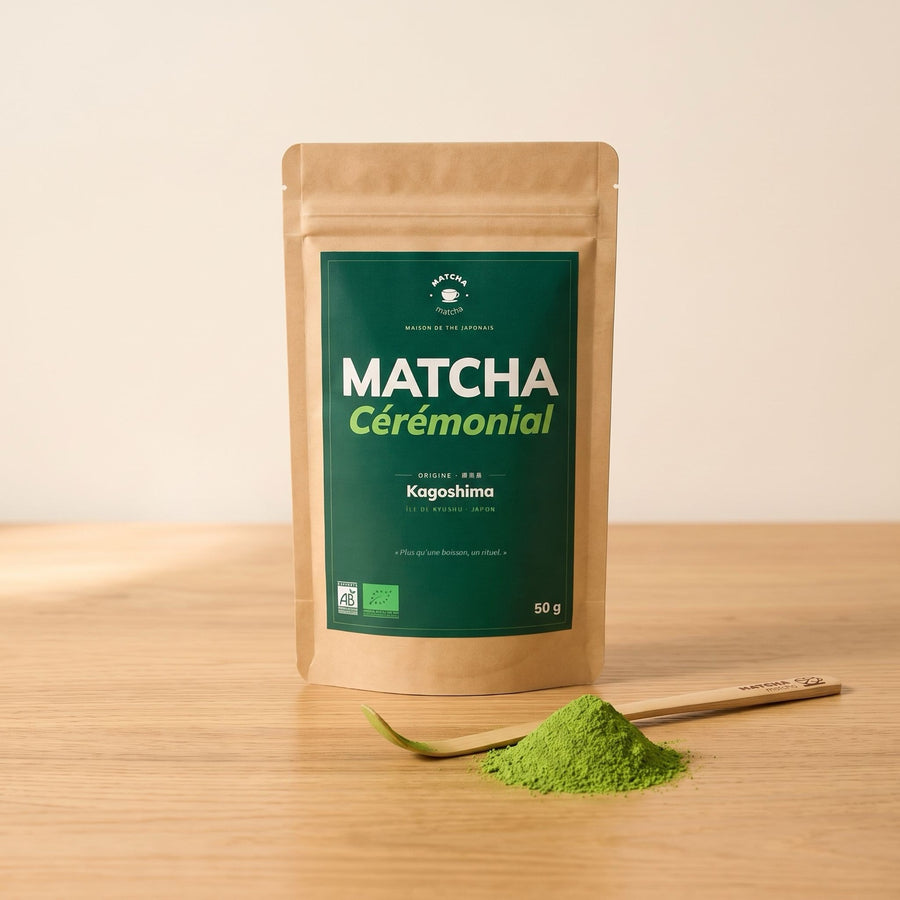
Organic Ceremonial Matcha
Smooth from the first sip, even if you don't like green tea.
29,90 € · about €0.60 a cup
-
Whisk
Read next


Professionals
Do you serve matcha?
Serve a smooth matcha that your customers like from the first cup. Organic Ceremonial Matcha in bulk from 1 kg, or under your own brand. Prices and documents are in our trade area, which is open only to cafés, restaurants and retailers.