Free delivery from €99 · Dispatched within 24 h Free delivery from €99

Your account

  • No password: we send you a code by email
  • You don't need an account to order
  • Track your parcels and reorder in one click
Sign in Create a professional account

Your basket(0 items)

Only 50,00 € more for a free spoon

Free spoon
Free whisk and spoon
Free delivery

Your basket is empty

Start with our Organic Ceremonial Matcha: 50 cups, about €0.60 a cup. Free delivery from €99.

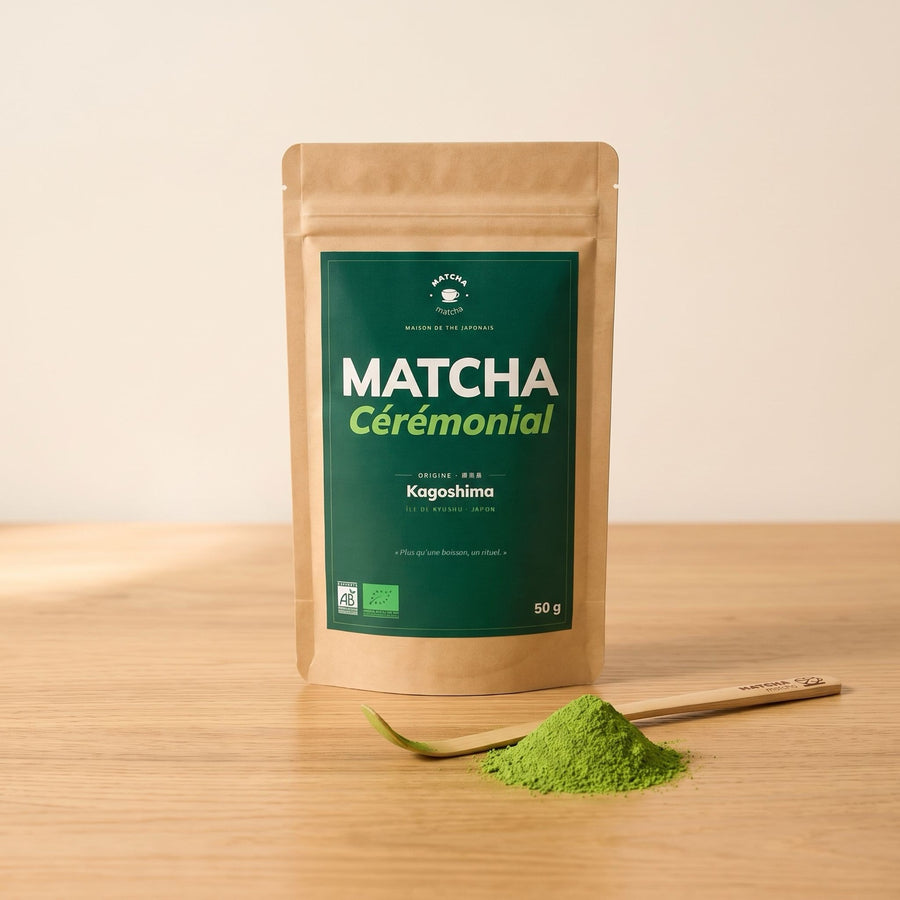
Sachet de Matcha Cérémonie Bio 50 g, matcha bio du Japon cultivé à Kagoshima, avec sa cuillère en bambou

Organic Ceremonial Matcha 50 g

29,90 €

Drink it on its own or as a latte. Ready in 20 seconds.

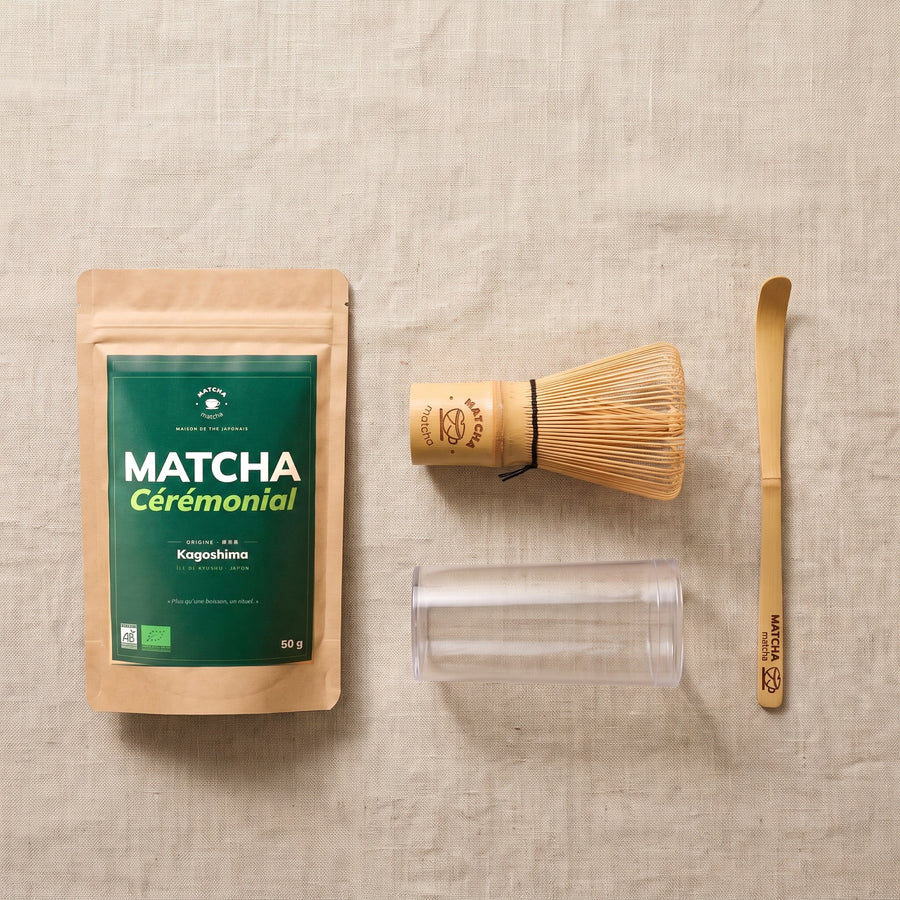
Kit matcha : sachet de 50 g de Matcha Cérémonie Bio, fouet à matcha en bambou (chasen) dans son tube et cuillère en bambou

Matcha Kit

44,90 € 49,70 €
-10%

The matcha, the whisk and the spoon. 9% cheaper.

See our matcha

Home › Matcha › Ube vs matcha

Ube vs matcha: what is the difference?

Ube vs matcha: matcha is a Japanese green tea, and it has caffeine. Ube is a purple yam, described as gently sweet with a vanilla note, and it has no caffeine. For a dessert in a cup or a drink without caffeine, choose ube. For a round tea taste or a morning drink, choose matcha.

We sell matcha, not ube. And we'll tell you when ube is the better choice.

By the Matcha Matcha team · updated November 2026 · 7 min read

Ube and matcha in two columns

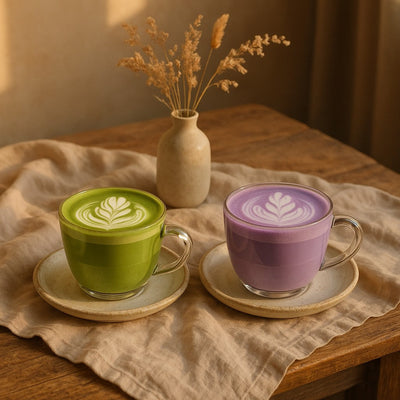
Un matcha latte vert et un ube latte violet côte à côte, dans deux tasses en verre posées sur une table en bois
Ube and matcha compared
CriterionMatchaMatchaUbeUbe
What it isA Japanese green tea, ground to a very fine powder.A purple yam, Dioscorea alata.[1]
OriginJapan. Ours comes from Kagoshima, from a first harvest.The Philippines, where its name comes from.[1]
TasteSmooth and vegetal, with a round, almost salty note: umami.Described as gently sweet and earthy, with vanilla and nutty notes.[1][2]
ColourBright green, the green of young leaves shaded for about three weeks.Deep purple, from its natural pigments, anthocyanins.[1]
CaffeineYes: 38 to 89 mg in a 2 g latte.[3]None in the yam.[4] If you avoid caffeine, ube wins.
TextureVelvety, with a fine foam once whisked.Moister than sweet potato.[1] In a drink, it depends on the product.
FormA powder.Powder, extract, frozen grated ube or jam (halaya).[2]
SugarYou don't have to sweeten it: ours is good on its own.It depends on the product. The list of ingredients will tell you.
Preparation2 g, which is one small teaspoon, whisked in 30 ml of water at 70 °C, then 150 ml of milk.In milk, depending on the form you buy. There is no single dose: follow the pouch.
Without milkYes: 1 g in 70 to 100 ml of water between 70 and 75 °C.More often as a milk drink, or in a dessert.[1]
CaloriesAbout 9 kcal for 2 g of powder. The rest comes from the milk and the sugar.No figure holds for a cup: it all depends on the product and the milk.

Which one fits your moment?

Pick the line that sounds like you. The verdict changes, and sometimes it is not in our favour.

A morning drink

Choose matcha

Two minutes to make, your usual milk, and the morning starts green. For caffeine, allow about 38 to 89 mg for a 2 g latte, depending on the powder.

The taste of tea, no sugar

Choose matcha

Vegetal, round, and you can make it with just water. Our Organic Ceremonial Matcha stays smooth even on its own, with no milk or sugar.

I've never tried either

Start with matcha

Here we are recommending our own product, and we say so openly. The Kit brings together the matcha, the bamboo matcha whisk (chasen) and the spoon: all you have left to do is take the milk out of the fridge.

A dessert in a cup

Choose ube

Matcha won't pretend to be a cake. Ube is described as sweet with a vanilla taste, and you drink it with milk: it's the one you need.

No caffeine, or in the evening

Choose ube

The yam contains no caffeine, and matcha does. Just check that the blend you buy contains no tea or coffee.

The best photo

Have both

Side by side, or one on top of the other in the same glass. Here we have no argument against it.

Have you picked your colour?

Leaning towards purple?

We don't sell it, and we won't send you to any seller. One piece of advice all the same: read the list of ingredients. They are listed from the heaviest to the lightest.[5] If ube comes a long way after sugar, you know what you are mostly drinking.

Leaning towards green?

One small teaspoon of Organic Ceremonial Matcha, your milk, and it's ready in two minutes. It is a first harvest from Kagoshima, and it stays smooth under the milk.

If you already have a whisk or a milk frother, take the pouch. If you are starting from nothing, take the Kit.

★★★★★ 4.5/5 · 262 shop reviews

  • OrganicKagoshima, Japan

    Organic Ceremonial Matcha

    Smooth and vegetal, ready in two minutes.

      29,90 € · about €1.20 of matcha per latte
    • Getting started

      Matcha Kit

      The matcha, the bamboo matcha whisk (chasen) and the matcha spoon to measure your 2 g.

        44,90 € · 9% cheaper than buying the three separately
      What is ube matcha?

      Ube matcha, or ube matcha latte, is a drink in two layers: ube at the bottom, milk, then matcha on top.[6]

      It is the glass you see on social media. People mostly drink it iced, with the matcha sitting on top of the milk. In a hot drink the layers mix faster. Nothing stops you from pairing the two: you make the green layer separately, with 2 g of matcha, which is one small teaspoon, in 30 ml of water at 70 °C. The glass contains the caffeine of its matcha, so it is no longer a caffeine-free drink. How the mix tastes is for you to say.

      Over ice, the matcha sits on top of the milk. This is the version in the photos.

      • Matcha
      • Milk
      • Ube

      Green in the morning, purple in the evening

      Caffeine: the real difference

      The clearest difference between the two is caffeine: matcha has it, ube does not.

      A 1 g cup of matcha gives 19 to 44 mg of caffeine depending on the powder,[3] and a 2 g latte about twice that. For a healthy adult, EFSA sees no safety concern up to 400 mg a day, and sets 200 mg at most during pregnancy.[7] Count this glass with your other drinks. If you are pregnant or on medication, or if the drink is for a child, ask your doctor.

      • Ube latte0 mg
      • Cup of matcha, 1 g19 to 44 mg
      • Matcha latte, 2 g38 to 89 mg
      • Ube matcha, 2 g38 to 89 mg

      0

      50 mg

      100

      The zero comes from a US table for yam in general, where it is a default value.[4] If your product also contains tea or coffee, its label will say so.

      And the benefits? We promise none here, for the green or for the purple. Our page on matcha sorts what is established from what is not, study by study.

      What do ube and matcha taste like?

      Ube is described as gently sweet with a vanilla note, and our matcha as smooth, vegetal and round when it is made well.

      Matcha

      smooth

      vegetal

      round

      umami

      Bitterness almost always comes from water that is too hot or a dose that is too large: with water between 70 and 75 °C, our Organic Ceremonial Matcha stays smooth.

      Ube

      gently sweet

      earthy

      nutty

      vanilla

      These are the words of the sources cited.[1][2] A sweetened or flavoured powder will taste of its recipe as much as of the yam, which is why the list of ingredients matters.

      The first tastes of tea and the second is closer to a dessert. That is probably all you need to remember in front of a café menu.

      What is ube?

      Ube is a purple yam from the Philippines, eaten as a purée, a powder or a jam, with a gentle taste that recalls vanilla.

      In the Philippines it goes into cakes, ice creams and doughnuts. Its colour did the rest on social media. Ube jam, called ube halaya, is one of the ingredients of halo-halo, an iced dessert.[1]

      Is ube a sweet potato?

      No. Ube is a true yam. The purple sweet potato, Ipomoea batatas, belongs to another family, the morning glories.[2] Both are purple, which explains the confusion, and ube is also mistaken for taro.[1] The yam also has a moister texture than the sweet potato.[1]

      Ube at a glance

      Ube and matcha compared
      Criterion
      Matcha
      Matcha[1]
      Ube
      Ube
      What it is
      A Japanese green tea, ground to a very fine powder.
      A purple yam, Dioscorea alata.[1]
      Origin
      Japan. Ours comes from Kagoshima, from a first harvest.
      The Philippines, where its name comes from.[1]
      Tea plants shaded under cloths before the matcha harvest

      What is matcha?

      Matcha is a powdered Japanese green tea: you drink the whole leaf, ground to a very fine powder.

      The young leaves are shaded for about three weeks before the harvest, then dried, sorted and ground in a stone mill. Kept out of the sun, the leaf stays tender, and that is where the round taste comes from. Our Organic Ceremonial Matcha is a first harvest from Kagoshima, in the south of Japan, and it is organically grown.

      Frequently asked questions

      What is the difference between ube and matcha?

      Ube is a purple yam, and matcha is a powdered Japanese green tea. Ube has no caffeine and is mostly drunk as a dessert. Matcha has caffeine and tastes of tea.

      What is ube matcha?

      A drink in two layers, often iced: ube mixed with milk at the bottom of the glass, then matcha on top. You will also see it called matcha ube.

      What does ube taste like?

      It is described as gently sweet and earthy, with vanilla and nutty notes. A flavoured powder can taste quite different from the yam itself.

      Does ube have caffeine?

      The yam has none. An ube product can contain some if it also has tea, coffee or matcha in it: the label will tell you.

      What is ube powder?

      It is purple yam sold as a powder, to mix into milk or to use in baking. Some powders are pure and others are blends: the list of ingredients tells you which.

      Can you mix ube and matcha?

      Yes. You make the matcha layer separately with a little hot water, then pour it over the ube milk. The glass then contains the caffeine of its matcha.

      Which has fewer calories?

      In the cup, the calories come mostly from the milk and the sugar. 2 g of matcha gives about 9 kcal. For ube, it all depends on the product: raw yam has 118 kcal per 100 g, but the amount per glass varies too much to give a figure. Our page on matcha latte calories explains the calculation.

      How do you pronounce ube?

      "OO-beh", in two syllables, with the stress on the first.

      Where can you buy ube?

      We don't sell it, and we don't recommend any seller: we have not compared these products. Read the list of ingredients before you buy.

      What are the health benefits of ube and matcha?

      We make no health promise here, for one or the other. For matcha, our page on benefits says what the studies show, and what they do not show.

      Sources

      Description of our matcha: our product page.

      Dioscorea alata, Wikipedia (English), read on 9 November 2026: names, origin, colour, taste, uses, texture.

      Purple Sweet Potatoes Vs. Ube: What's The Difference?, Tasting Table, read on 9 November 2026: botanical families, taste, forms sold.

      Kochman J. et al., Health Benefits and Chemical Composition of Matcha Green Tea, Molecules, 2021, 26(1), 85: caffeine content.

      USDA FoodData Central, Yam, raw (FDC 170071), read on 9 November 2026: 118 kcal per 100 g, caffeine 0 mg as a default value, yam in general.

      Regulation (EU) No 1169/2011, Article 18: order of ingredients on the label.

      Iced Ube Matcha Coconut Latte, Tasting Table, read on 9 November 2026: how the glass is layered.

      EFSA, Scientific Opinion on the safety of caffeine, EFSA Journal, 2015, 13(5), 4102.

      Ube, Wiktionary, read on 9 November 2026: pronunciation in Tagalog.

      Professionals

      Do you serve matcha?

      Serve a smooth matcha that your customers like from the first cup. Organic Ceremonial Matcha in bulk from 1 kg, or under your own brand. Prices and documents are in our trade area, which is open only to cafés, restaurants and retailers.