Yerba Mate or Matcha? Which Drink to Choose for an Energy Boost
By the Matcha Matcha team
Contents 5 portions
Yerba mate and matcha are both known for their energising effects—but which one is better for your health and daily routine? Discover their key differences and why matcha is an ideal choice for a clean, balanced energy boost.
Introduction to Yerba Mate and Matcha
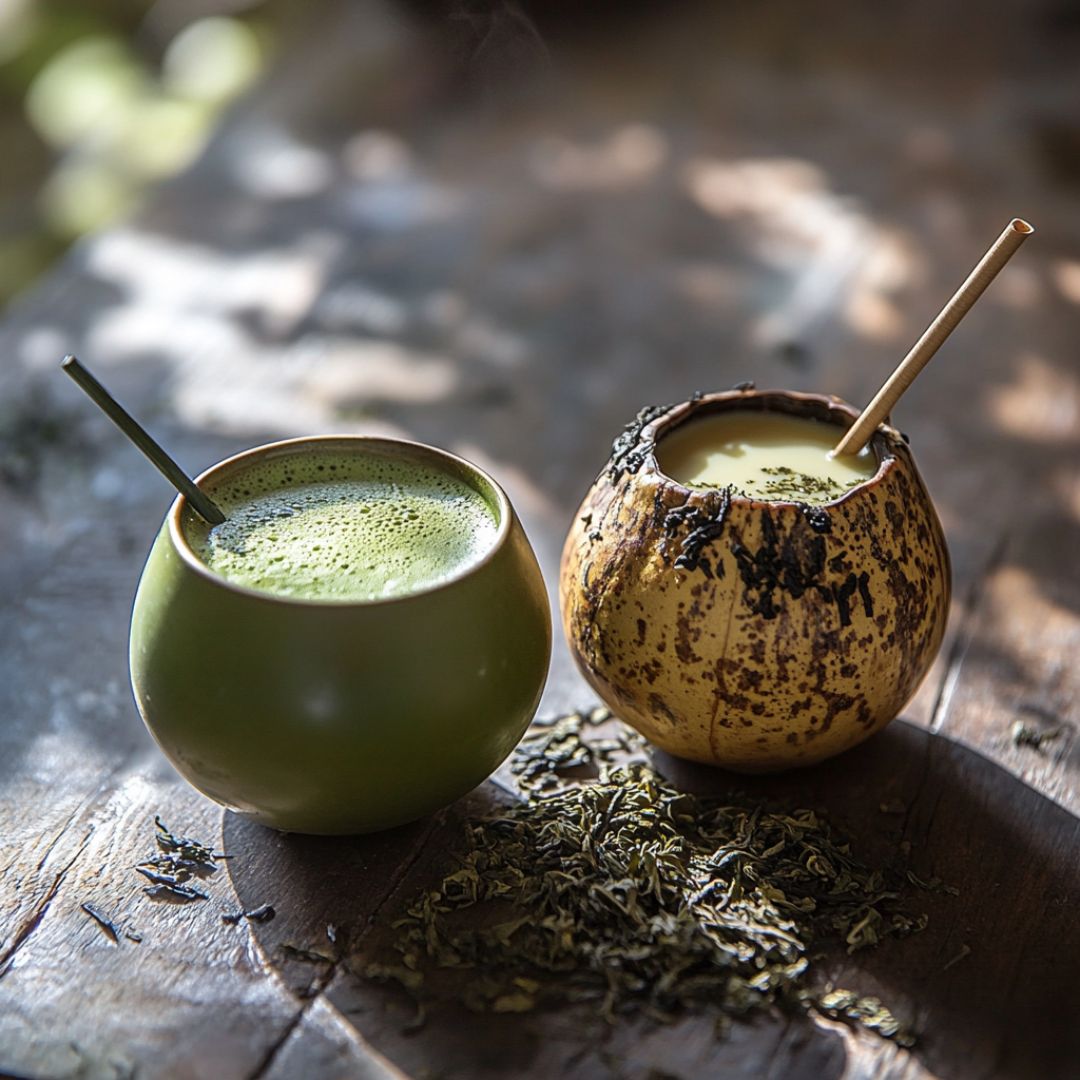
Yerba mate and matcha are two drinks rooted in long-standing traditions. Originating in South America, mate leaves are infused to create a caffeine-rich, energising drink, widely enjoyed in Paraguay, Argentina and Brazil. Used for centuries by the Guaraní people, mate was originally consumed by chewing the leaves before being brewed in a gourd—an act that strengthened social bonds through shared rituals. Mate is therefore a convivial drink, often enjoyed with friends or family. Matcha, on the other hand, is a powdered green tea cultivated in Japan. Originally from China during the Song dynasty, it was adopted by Japanese Buddhist monks to support meditation before becoming central to the tea ceremony in the 16th century—symbolising calm and refinement. Matcha is renowned for its unique production process, which concentrates the antioxidants and nutrients found in the whole leaf. Both drinks are consumed for their energising effects and health benefits, but there are important differences that make matcha a standout option, especially for anyone looking for a more balanced, body-friendly alternative.
 Matcha and mate: two very different worlds
Matcha Benefits Compared to Yerba Mate
1. Gentle, steady energy with matcha
The biggest advantage of matcha over mate is how it delivers energy. Matcha contains L-theanine, an amino acid that works in synergy with caffeine to provide a smooth, long-lasting boost—without the spikes and crashes often felt after coffee or even mate. With around 75 mg of caffeine per serving (vs ~80 mg for mate and ~160 mg for coffee), matcha can support steady energy for up to 4 hours, ideal for sustained focus. This combination is perfect if you want to stay sharp throughout the day without feeling jittery.
Mate is also rich in caffeine, but without a significant amount of L-theanine, its stimulation can feel stronger—and for some people, it may trigger nervousness or palpitations. That said, mate contains theobromine (also found in chocolate), which softens its energising effect and can promote a feel-good sensation. Overall, matcha remains the more balanced option—especially if you’re looking for calm, natural energy.
For the best experience, we recommend our organic ceremonial matcha.
2. Antioxidants: matcha leads
Matcha is a true antioxidant powerhouse. Because you consume the whole tea leaf, you benefit from a high concentration of catechins, including EGCG (epigallocatechin gallate), known for supporting metabolism and fighting free radicals. These antioxidants help protect cells from damage and reduce inflammation.
Mate also contains antioxidants, but typically in lower amounts than matcha. It’s notably rich in chlorogenic acid, which may help support healthy blood pressure, cholesterol levels and microbial balance. To enjoy the full benefits, explore our range of premium organic matcha.
3. Taste and versatility
Matcha is often described as umami, with fresh vegetal notes and a subtle natural sweetness. Its unique flavour makes it perfect for many preparations: enjoy pure matcha, make a matcha latte, or blend it into sweet and savoury recipes.
Mate, in contrast, has a bolder taste—often bitter and herbaceous. Its woody or smoky profile can be softened with honey, sugar or flavoured infusions, but it tends to be less versatile than matcha.

Side effects comparison: Matcha vs Yerba Mate
Matcha stands out for delivering energy without the jitters. Thanks to L-theanine, matcha’s caffeine is released more gradually, supporting longer-lasting alertness without unpleasant side effects like nervousness or insomnia. Mate, while natural, may sometimes cause coffee-like effects in people who are sensitive to caffeine.
Quick comparison table: Matcha vs Yerba Mate
| Criteria | Matcha | Yerba Mate |
|---|---|---|
| Energy | ~75 mg caffeine + L-theanine (up to 4 h) | ~80 mg caffeine + theobromine (2–3 h) |
| Antioxidants | Very rich in EGCG | Chlorogenic acid |
| Taste | Umami, smooth | Bitter, woody |
| Versatility | Lattes, smoothies, recipes | Mainly infusion |
| Side effects | Rare jitters | Can feel stimulating/jittery |
Conclusion
While yerba mate is a traditional, caffeine-rich drink, matcha stands out for its balanced effects, antioxidant density and versatility. To discover our premium selection, visit our homepage: matcha-matcha.eu.