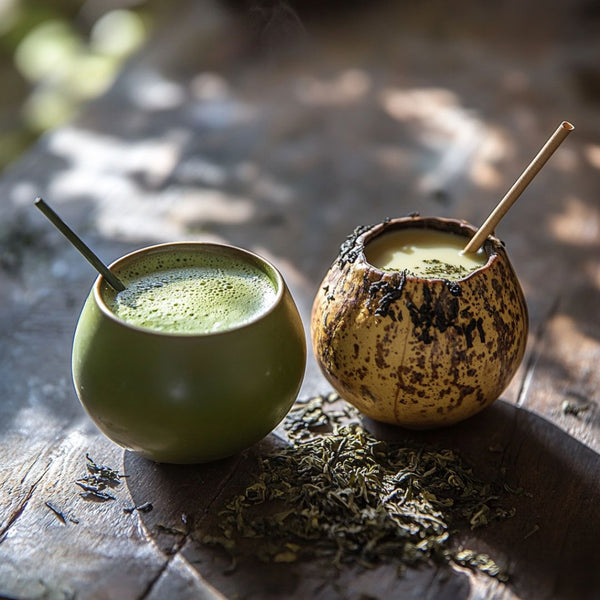
Matcha vs Coffee: Why Matcha Is a Better Alternative for Steady Energy
By the Matcha Matcha team
Contents 8 portions

Between matcha and coffee, matcha stands out as a smoother, more balanced alternative for everyday energy. Discover the differences in composition, effects, benefits and flavour — plus practical tips to make matcha part of your routine.
Matcha vs Coffee: composition and active compounds
Reading time: 8 minutes
Caffeine content and how it works
Coffee provides around 95 mg of caffeine per 240 ml cup on average, with fast absorption that often creates a quick spike followed by a “crash”. Matcha contains roughly 30 mg of caffeine per gram of powder (about 60 mg for 2 g), released more gradually thanks to L-theanine. This slower release supports steadier energy for longer.
Gradual release vs sharp peak
The L-theanine in matcha helps modulate caffeine’s effect, creating a calm alertness rather than jitters. Coffee, on the other hand, stimulates the nervous system quickly, which can lead to anxiety or tremors if you’re sensitive or consume too much.

Key comparison table
| Criteria | Coffee | Matcha |
|---|---|---|
| Caffeine | 95 mg/cup | 60 mg for 2 g |
| Release | Fast, sharp peak | Gradual, no crash |
| Antioxidants | Moderate | Very high (EGCG) |
| Digestive impact | May irritate | Gentler, soothing |
| Calories | 0–5 kcal | 0 kcal (without add-ins) |
Health benefits: matcha vs coffee
Antioxidants and cellular protection
Matcha is packed with catechins, especially EGCG, which help protect cells from oxidative stress. Coffee contains antioxidants too, but its benefits can be offset for some people by acidity. Matcha is often considered a more “gentle” daily ritual for overall wellness support.
Metabolism support
Studies suggest matcha can support thermogenesis and fat oxidation, which may help with weight management as part of a healthy lifestyle. Coffee can also support metabolism, but without L-theanine’s balancing effect, energy and mood can feel more “up and down”.
Mental clarity and stress
Thanks to L-theanine, matcha supports alpha brain waves linked to relaxation and creativity. Coffee can feel more intense on the nervous system, which may increase anxiety in sensitive individuals.
Effects on sports performance
Matcha can provide a longer-lasting boost without the palpitations some people experience with coffee. Its antioxidant profile may also support recovery. Coffee is effective for a fast kick, but overconsumption can contribute to dehydration or muscle tension for some people.
How to use and dose matcha
Best times to drink it
Enjoy matcha in the morning or early afternoon. For training, drink it about 30 minutes before your workout. Avoid late afternoon if you’re sensitive to caffeine. For coffee, many people feel best limiting it to 1–2 cups earlier in the day.
Recommended dosage
For matcha: 1–2 g (½–1 tsp) per cup, whisked with water around 70°C. For coffee: roughly 7 g per 240 ml cup with water around 90°C.
Variations and easy recipes
Creamy matcha latte
Whisk matcha with warm water, then add 150 ml warm plant milk and a drizzle of maple syrup.
Refreshing matcha spritz
Shake 1 g of matcha with cold water and ice, then top up with sparkling water.
Green smoothie
Blend banana, spinach, 1 g of matcha and 200 ml coconut water for a nutrient-rich boost.

Why choose our Organic Ceremonial Matcha?
Our Organic Ceremonial Matcha comes from Kagoshima, Japan, and is stone-ground for a silky texture and clean flavour. Expect a naturally smooth cup, a beautiful foam, and a ritual that supports both focus and well-being.

Practical tips
- Always sift your matcha to avoid clumps.
- Use a bamboo whisk (chasen) for a fine foam.
- Store it properly: cool, dry, away from light and humidity.