


Matcha side effects: what to know before you drink it
The side effects of matcha come mostly from its caffeine. Depending on the dose and the time of day, it can disturb your sleep, and sensitive people may feel their heart beat faster. Tea can also reduce how much iron you absorb from the same meal, and green tea can interact with some medicines. Tests published in 2026 also found aluminium in matcha. If you are pregnant, taking medication or thinking of giving it to a child, talk to your doctor.
By the Matcha Matcha team, updated on 8 November 2026. 9-minute read.

What are you feeling?
This page is for information only. It does not make a diagnosis and does not replace a doctor.
Emergency. Difficulty breathing, swelling of the face or throat, chest pain, feeling faint: call 112, the emergency number across Europe.
Matcha and nervousness: why you can feel restless
Guidance from a health authority
Most of the time, it's the caffeine. The same cup suits one person perfectly and makes another restless.
What is reported
A 1 g cup contains about 19 to 44 mg of caffeine, depending on the matcha [1]. Anses, the French food safety agency, points out that people differ so much that it is hard to set a maximum dose [5].
Guidelines
Add up the matcha, coffee, tea and soft drinks you have during the day. Go back to 1 g per cup. Avoid mixing caffeine and alcohol [5].
When to talk to a doctor
If the anxiety becomes a lasting problem, or if you have a psychiatric or neurological condition [5].
Matcha and sleep: what time should you stop?
Guidance from a health authority
A cup drunk too late can delay falling asleep, especially if you are sensitive to caffeine.
What is reported
At around 100 mg, caffeine can disturb some people's sleep if they take it close to bedtime [3]. A 2 g latte can already come close: 38 to 89 mg, depending on the matcha [1].
Guidelines
Keep matcha for the morning or early afternoon. If you still sleep badly without a late cup, talk to your doctor.
When to talk to a doctor
If insomnia lasts several weeks or weighs on your days.
Matcha and headaches: too much caffeine, or stopping suddenly?
Studies on tea or caffeine, not on matcha
The best-described case is the withdrawal headache, when you cut out caffeine all at once.
What is reported
The International Classification of Headache Disorders defines it like this: more than 200 mg of caffeine a day for more than two weeks, then a headache within 24 hours of the last intake. It goes away within 7 days at most without caffeine [15]. We have not found any study on matcha itself.
Guidelines
If you want to cut down, reduce little by little rather than overnight, and note what time the headache comes on.
When to talk to a doctor
A severe or unusual headache, with fever or problems with your sight or speech: see a doctor straight away. And if headaches keep coming back, talk to your doctor.
Matcha and palpitations: when your heart speeds up
Guidance from a health authority
In sensitive people, caffeine can make the heart beat faster.
What is reported
Anses lists a fast heart rate (tachycardia) among the signs of too much caffeine, along with heart rhythm disorders that alcohol can make worse in people who are predisposed [5].
Guidelines
Count what you have drunk during the day, and talk to your doctor if it keeps happening. If you are predisposed, avoid caffeine before hard exercise [5].
When to talk to a doctor
If it keeps happening, or if you have a heart condition [5]. Chest pain, feeling faint, shortness of breath: call 112, the emergency number across Europe.
Matcha and diarrhoea or nausea: why can it happen?
No solid data for matcha
Some tea drinkers say that tea on an empty stomach doesn't sit well with them, sometimes with nausea, more frequent bowel movements or even diarrhoea. We found no study and no authority that puts a figure on it.
What is reported
Caffeinated drinks are among the foods and drinks that can soften stools [16]. With matcha, you swallow the whole leaf, ground into powder. We have not found a solid study that puts a figure on these complaints for a cup of matcha, and we would rather tell you so.
Guidelines
Drink your cup after eating, go back to 1 g, and see if the discomfort goes away.
When to talk to a doctor
Blood in your stools, severe pain, vomiting, or discomfort that continues despite these changes.
Matcha and constipation: is there a link?
No solid data for matcha
Nothing solid links matcha to constipation.
What is reported
The MSD Manual lists not drinking enough fluids among the common causes, and puts caffeinated drinks on the side of soft stools [16]. None of the sources we read points to tea.
Guidelines
Look at what changed at the same time as the matcha: your meals, how much water you drink during the day, a new medicine.
When to talk to a doctor
Severe or persistent pain, a swollen belly, vomiting, blood in your stools [16].
Matcha and reflux: heartburn and acid coming back up
Studies on tea or caffeine, not on matcha
Tea and caffeine may play a part in people prone to reflux, but nobody has measured it with matcha.
What is reported
Among 48,308 American nurses followed for years, those who drank more than six cups of tea a day reported slightly more acid reflux than those who drank none [13]. This is an association, seen with brewed tea. Anses also notes that the side effects of caffeine are stronger in people with reflux or an ulcer [5].
Guidelines
The recommendations sheet from SFHGL, a French gastroenterology society (May 2026), advises cutting down on tea and coffee, avoiding them if they trigger symptoms, and leaving 2 to 3 hours between dinner and bedtime [20].
When to talk to a doctor
If heartburn comes back often, if you have trouble swallowing or if you have a known ulcer.
Matcha allergy: rare, but reported
No solid data for matcha
Allergies to green tea have been published. There is not enough data to say how often they happen.
What is reported
The medical literature mostly describes asthma linked to tea-leaf dust in people who handle it, and a few food allergies to green tea [17]. A publication cited by the AAAAI, the American academy of allergy, points to a catechin, EGCG, in asthma linked to green tea [17].
Guidelines
Stop drinking it. Write down what you ate and drank before the reaction, and keep the pouch to show the allergist.
When to talk to a doctor
Itching or rashes that keep coming back: see an allergist. Swelling of the face or throat, difficulty breathing, feeling faint: call 112, the emergency number across Europe [19].
More of a situation than a symptom?
How much caffeine do you really drink?
Nervousness, palpitations, sleep: three of the eight complaints start here. Add up everything you have drunk today, because the matcha alone tells you nothing. The details are in how much caffeine is in matcha.

| Drink | Caffeine, approx. | Today |
|---|---|---|
| Cup of matcha1 g | 19 to 44 mg [1] | |
| Matcha latte2 g | 38 to 89 mg [1] | |
| Espresso60 ml | 80 mg [3] | |
| Filter coffee200 ml | 90 mg [3] | |
| Black tea220 ml | 50 mg [3] |
Your day
99 to 124 mg
Reference from the European Food Safety Authority (EFSA) for a healthy adult: 400 mg a day, from all drinks combined, and 200 mg in a single dose [2].
This calculation does not mean you are safe: sensitivity varies from one person to another, and it does not replace a doctor's advice.
Four moments to watch
7:00
On an empty stomach
If your stomach reacts, eat first.
12:00
With a meal
If you are low in iron, move your cup to another time [4].
13:00
An hour later
The gap tested in the iron study [4].
22:00
Close to bedtime
If you are sensitive, stop well before [3].
Matcha contraindications: your situation changes the answer
Six cases where a doctor's advice comes before everything else. For each one, we have prepared the question to ask.
Pregnant or breastfeeding
Pregnant or breastfeeding
1
What the sources say
During pregnancy and breastfeeding, EFSA's reference is 200 mg of caffeine a day at most, from all drinks combined [2]. Anses asks for particular caution [5].
2
Guidelines
Count everything that contains caffeine, including coffee and chocolate. Leave out supplements made with green tea extract: their label must advise against them during pregnancy and breastfeeding [21].
The question to ask your doctor
Given my pregnancy (or breastfeeding), how much caffeine a day do you advise, and can matcha be part of it?
You are taking medication
You are taking medication
1
What the sources say
Green tea can change how some medicines work: nadolol (a beta blocker), atorvastatin or raloxifene [6]. Caffeine can also interact with some treatments [5].
2
Guidelines
Do not change your treatment on your own. Take the list of your medicines to your pharmacist, and tell them that with matcha you drink the whole leaf.
The question to ask your doctor
Can my treatment interact with green tea or caffeine? Should I leave a gap between matcha and my doses?
Low ferritin, lack of iron
Low ferritin, lack of iron
1
What the sources say
Tea can reduce the absorption of iron from plant foods when you drink it with a meal. In a small study of twelve women, waiting an hour after the meal reduced this effect [4]. We have not found a study done with matcha.
2
Guidelines
In this study, the tea was drunk one hour after the meal. Ask your doctor what suits your iron level. If you take iron tablets, ask when to take them.
The question to ask your doctor
With my ferritin at this level, how long should I leave between my meals or my iron and a cup of tea or matcha?
High blood pressure or heart disease
High blood pressure or heart disease
1
What the sources say
In people with high blood pressure, 200 to 300 mg of caffeine raised blood pressure within the first hour, for at least three hours. Over two weeks, three trials on coffee showed no rise [14]. This research is on caffeine and coffee, not on matcha. Anses notes stronger side effects in people with high blood pressure [5].
2
Guidelines
Count the caffeine in your day, and do not change any treatment because of a drink.
The question to ask your doctor
How much caffeine a day do you advise? Should I avoid it before measuring my blood pressure?
For a child or a teenager
For a child or a teenager
1
What the sources say
Matcha contains caffeine and is not designed for children. For them, EFSA does not set a safe dose and suggests a reference of 3 mg per kilo per day, from all sources combined [2].
2
Guidelines
Talk to their doctor before giving them any.
The question to ask your doctor
Can my child try matcha at their age, and how often, given the caffeine they already have?
Liver disease, green tea supplements
Liver disease, green tea supplements
1
What the sources say
Rare cases of liver damage have been described, mostly with concentrated green tea extracts in capsules or tablets [7] [8]. Anses also calls for caution in people with severe liver disease or kidney failure [5].
2
Guidelines
Matcha is not a concentrated extract, and no data can tell us whether it behaves like brewed tea. Do not drink it as a course of treatment, and do not combine it with a green tea supplement.
The question to ask your doctor
Given what my test results show, can I drink matcha? Should I stop my green tea supplement?
Matcha and aluminium: what should you know?
The tea plant takes up aluminium from the soil, all teas contain it, and with matcha you swallow the whole leaf.
The tea plant grows on acidic soils and builds up this element in its leaves, far more than most plants [18]. When you brew tea, part of it stays in the filter with the leaves. With matcha, nothing stays behind.
What has been published
May 2025
Anses sets a reference value of 40 micrograms per kilo of body weight per day, for the whole diet, over the long term [9].
February 2026
Anses considers exposure to aluminium too high for all or part of the population [10].
September 2026
Tests on matcha sold in France are published: every matcha tested contains aluminium.
October 2026
A written question is put to the government in the French National Assembly. It had not been answered when we last updated this page [11].
What remains unanswered
- How much of this aluminium the body really takes in from matcha: we have not found any published measurement.
- A legal limit: the European regulation on contaminants sets no maximum level for aluminium [11] [12].
What we take from it
The Anses value is about daily exposure and the whole diet, not a single cup [9]. Drinking matcha every day is daily exposure. Matcha is a drink to have in measured amounts, and the more powder you put in the cup, the more you swallow.
If you are pregnant, if it is for a child, or if you drink it every day: talk to your doctor. Like all matcha, ours contains aluminium. You can ask us for its lab report: a member of our team replies within 24 hours.
Every complaint, in one line each
| What you feel | What is reported | Guideline |
|---|---|---|
| Nervousness, restlessness | Caffeine | Count all your caffeinated drinks, go back to 1 g |
| Palpitations, fast heartbeat | Caffeine | Count what you have drunk, talk to your doctor if it keeps happening |
| Trouble sleeping | Caffeine, too late in the day | Keep matcha for the morning or early afternoon |
| Headaches | Stopping caffeine suddenly, among other causes | Cut down little by little, note the time |
| Nausea, upset stomach, diarrhoea | A cup on an empty stomach, perhaps | Drink it after a meal, go back to 1 g |
| Constipation | No established link | Look at water, meals and medicines |
| Reflux, heartburn | Tea and caffeine, possibly | Cut down on tea and coffee, talk to a doctor |
| Itching, rashes | Allergy, rare | Stop, see an allergist |
| Symptoms that last | Cause to be found | Stop and ask a doctor's advice |
Frequently asked questions
Is matcha bad for you?
It depends on how much you drink and on your situation, and we cannot tell you there is no risk. What has been reported comes mostly from caffeine and from concentrated green tea extracts. Tests published in 2026 also found aluminium in matcha.
What are the three most common side effects?
No authority has ranked them for matcha. The effects most often reported for caffeine are disturbed sleep, a racing heart and nervousness [3] [5]. Tea drinkers also report stomach complaints, with no precise measurement for matcha.
When should you not drink matcha?
Late in the evening if you are sensitive to caffeine, on an empty stomach if your stomach reacts, and with a meal if you are low in iron. If you are pregnant, taking medication or thinking of giving it to a child, ask your doctor first.
What happens if you drink too much?
The signs reported are those of too much caffeine: a fast heartbeat, disturbed sleep [5]. We don't give a number of cups, because caffeine varies from one matcha to another and everyone reacts differently. The EFSA reference covers all the drinks in your day [2].
Is matcha good for the liver?
Nothing allows us to say so. The liver damage that has been described mostly involves concentrated green tea extracts [7] [8]. Do not combine matcha with a green tea supplement.
Can matcha cause palpitations?
In sensitive people, caffeine can make the heart beat faster. If this happens to you, lower the dose, count your other caffeinated drinks and talk to your doctor.
Can you drink matcha while breastfeeding?
EFSA's reference is 200 mg of caffeine a day at most during breastfeeding, from all drinks combined [2]. Ask your doctor or midwife before drinking it regularly. We cover this in detail in matcha and pregnancy.
What does matcha do to your body?
It contains caffeine, which can disturb sleep depending on the dose and the person. For the rest, read what the studies really say.
Does matcha contain aluminium?
Yes, like all teas: the tea plant takes up this element from the soil, and with matcha you swallow the whole leaf. Tests published in 2026 found it in every matcha they tested. The European regulation on contaminants sets no maximum level for aluminium. To compare pouches, here are the criteria for choosing the best matcha powder.
What are the downsides of matcha?
The ones that have been reported come mostly from caffeine: disturbed sleep, a racing heart, nervousness. Concentrated green tea extracts raise other questions, and tests published in 2026 found aluminium in matcha.
Sources
Documents consulted on 8 November 2026. This page is for information only and does not replace medical advice.
Kochman J. et al., Molecules, 2021, citing Koláčková et al., 2020. pmc.ncbi.nlm.nih.gov
EFSA, scientific opinion on the safety of caffeine, 2015; 13(5): 4102. doi.org
EFSA, Caffeine topic page. efsa.europa.eu
Ahmad Fuzi S. et al., Am J Clin Nutr, 2017. pubmed.ncbi.nlm.nih.gov
Anses (French food safety agency), "La caféine, une substance pas si anodine" (Caffeine, not such a harmless substance), 02/10/2020. anses.fr
NCCIH, Green Tea. nccih.nih.gov
EFSA, scientific opinion on the safety of green tea catechins, 2018; 16(4): 5239. pmc.ncbi.nlm.nih.gov
LiverTox (NIH), Green Tea. ncbi.nlm.nih.gov
Anses, opinion 2023-MPEX-0137, 23/05/2025. anses.fr
Anses, third French total diet study (EAT3), 12/02/2026. anses.fr
Written question no. 18976, French National Assembly, 13/10/2026. assemblee-nationale.fr
Regulation (EU) 2023/915 on maximum levels for certain contaminants in food. eur-lex.europa.eu
Mehta R.S. et al., Clin Gastroenterol Hepatol, 2020. pubmed.ncbi.nlm.nih.gov
Mesas A.E. et al., Am J Clin Nutr, 2011. pubmed.ncbi.nlm.nih.gov
International Classification of Headache Disorders (ICHD-3), 8.3.1. ichd-3.org
MSD Manual (French consumer edition), "Constipation chez l'adulte" (Constipation in adults). msdmanuals.com
AAAAI, Tea allergy, 2021. aaaai.org
Research advances in aluminum tolerance and accumulation in tea plant, Beverage Plant Research, 2023. agris.fao.org
French national health insurance (Assurance maladie), "Traitement de l'allergie" (Allergy treatment). ameli.fr
SFHGL (French gastroenterology society), Nutrition Committee, sheet "Le reflux gastro-œsophagien" (Gastro-oesophageal reflux), May 2026. sfhgl.org
Regulation (EU) 2022/2340, OJ L 310, 01/12/2022. eur-lex.europa.eu
Try it
-
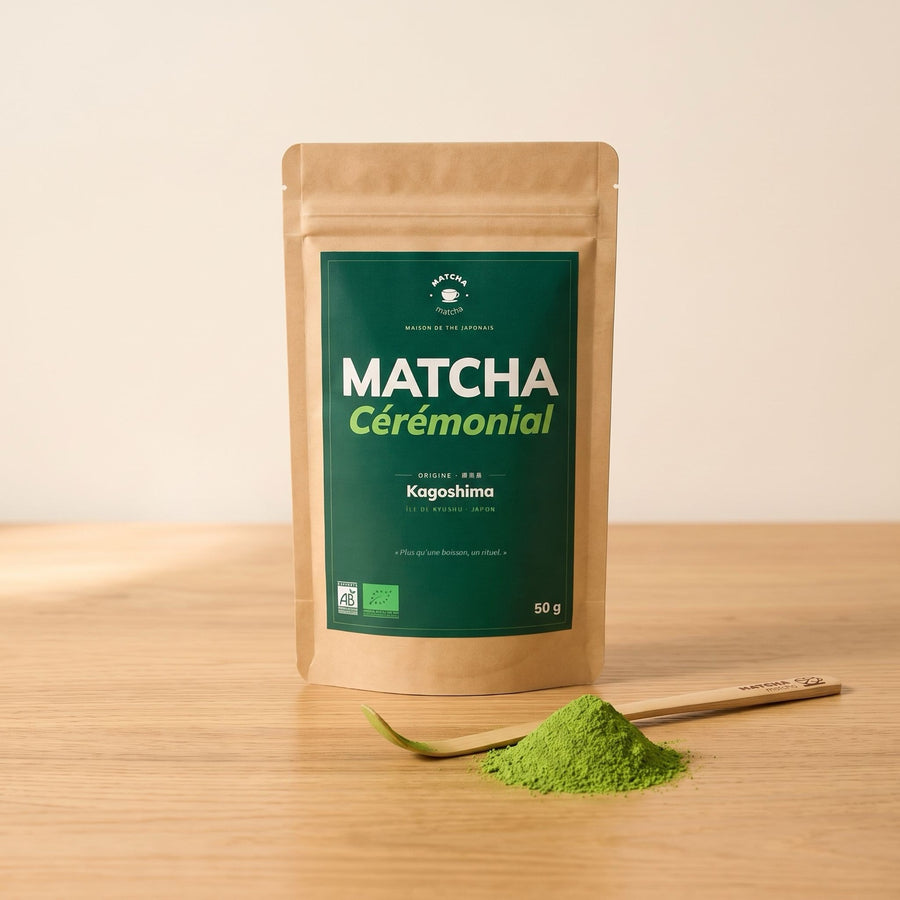 OrganicKagoshima, Japan
Organic Ceremonial Matcha
Smooth from the first sip, even if you don't like green tea.
29,90 € · about €0.60 a cup


Professionals
Do you serve matcha?
Serve a smooth matcha that your customers like from the first cup. Organic Ceremonial Matcha in bulk from 1 kg, or under your own brand. Prices and documents are in our trade area, which is open only to cafés, restaurants and retailers.