Can you drink matcha in the evening?
Yes, if you sleep well and drink it early enough. Matcha contains caffeine, which can disturb some people's sleep.
By the Matcha Matcha team
Contents 12 portions
- Matcha: an energising drink for the evening?
- What are the effects of the caffeine in matcha?
- How late can you drink matcha?
- Matcha before bed: a good choice to relax?
- A tip to enjoy matcha without disturbing your sleep
- Mistakes to avoid in the evening
- Special cases (insomnia, anxiety, pregnancy, medication)
- Caffeine-free alternatives for the evening
- Coffee or matcha in the evening: which disturbs sleep less?
- Matcha as a drink to go with meditation
- Quick checklist: drinking matcha in the evening
- Health disclaimer and health claims
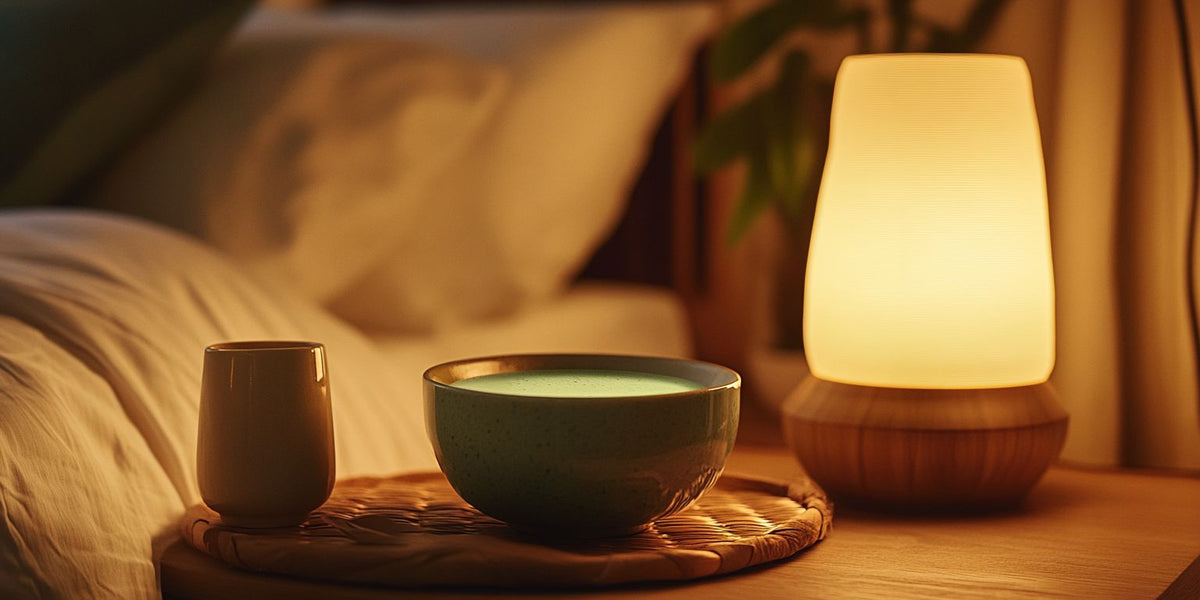
Matcha has a reputation for gentle energy, but can you drink matcha in the evening without it getting in the way of your sleep? Here is how L-theanine interacts with caffeine, which precautions to take and how to fit matcha into your evening routine.
Can you really drink matcha tea in the evening without disturbing your sleep? Find out whether it can fit into your evening routine
Reading time: 7-9 minutes
Matcha: an energising drink for the evening?
People like matcha for its energy, which comes from the caffeine it contains, but what happens if you drink it in the evening? Coffee tends to give a peak of energy followed by a dip. Matcha releases its energy more gradually.
This slower release is linked to L-theanine, an amino acid that is thought to smooth out the effect of caffeine and is associated with a calm state.
Is it right for the evening? It depends on how sensitive you are to caffeine: some people are fine with a small cup, others find their sleep is disturbed.
In short, if you are asking "can you drink matcha in the evening", the answer is yes, in small amounts, especially if you already drink matcha tea in the evening and fall asleep without trouble. If not, keep it for the morning or early afternoon.
- Caffeine = theine (the same molecule), but the tea matrix (L-theanine + polyphenols) slows down absorption → calm alertness.
- Studies link L-theanine to alpha waves, which are associated with a calm, awake state. No effect has been established for a single cup.
- Your tolerance depends on how you metabolise caffeine (the CYP1A2 enzyme), on the time of day and on how much sleep you are short of.
What are the effects of the caffeine in matcha?
Matcha contains about 30 mg of caffeine per gram, compared with 95 mg on average in a cup of coffee. This moderate amount tends to give calm alertness rather than a sharp burst of energy.
If you have trouble sleeping, avoid drinking matcha after 17:00.
How long caffeine lasts
Caffeine has a half-life of about 5 to 6 hours: if you drink matcha at 18:00, some of it will still be in your body at midnight. To limit the impact, keep the dose to 0.5-1 g and drink it at least 5 hours before going to sleep.
| Preparation | Matcha dose | Estimated caffeine | For the evening? |
|---|---|---|---|
| Light usucha (traditional) | 0.5-1 g / 70-100 ml | ≈ 15-35 mg | Possible, if taken early |
| Light matcha latte | 0.5 g / 200-250 ml | ≈ 15 mg | A "soft" option for the evening |
| Koicha (thick) | 2-4 g / 40-60 ml | ≈ 60-120+ mg | Not advised in the evening |
How late can you drink matcha?
A simple rule: 5-6 hours before bed. If you go to bed at 23:00, avoid matcha after 17:00-18:00. People who are sensitive to caffeine should stop earlier, in the early afternoon. The same rule answers the usual questions: "drinking matcha in the evening", "can you drink matcha tea at night", "matcha before bed".
| Profile | Latest suggested time | Dose |
|---|---|---|
| Normal tolerance | 17:00-18:00 | 0.5-1 g |
| Very sensitive to caffeine | 14:00-16:00 | 0-0.5 g (or avoid) |
| Used to green tea | 18:00-19:00 | 0.5-1 g max |
Matcha before bed: a good choice to relax?
Matcha contains L-theanine, which studies link to alpha brain waves, associated with relaxation. No effect on stress has been established for a single cup.
For a softer cup, try a matcha latte made with almond or oat milk, which slightly softens the stimulating effect.
Want a gentle version? Follow our step-by-step recipe: matcha latte for the evening (gentle recipe). For a silky cup, a bamboo matcha whisk helps you make a fine, even foam. See also: how to make a matcha latte.
A tip to enjoy matcha without disturbing your sleep
Cut the powder down to half a teaspoon: you still get the L-theanine, with less caffeine.
Mistakes to avoid in the evening
- Using too much: a light usucha is enough. Avoid koicha (thick matcha) in the evening.
- Adding a lot of sugar: blood sugar spikes can make it harder to fall asleep. Use little or no sweetener.
- Drinking it just before bed: leave 5-6 hours before you sleep.
- Ignoring your tolerance: if you are sensitive, keep matcha for the morning.
- Adding up sources of caffeine: coffee, fizzy drinks, chocolate + matcha = disturbed sleep.
Special cases (insomnia, anxiety, pregnancy, medication)
- Insomnia / light sleep: drink it in the morning, and avoid matcha after 14:00-16:00.
- Anxiety / palpitations: the smallest dose (0.5 g), and only early in the day. Pay attention to how you feel.
- Pregnancy / breastfeeding: ask a health professional for advice and limit caffeine overall.
- Medication: take care if you take vitamin K antagonist anticoagulants, blood pressure medication, MAOIs or stimulants. Ask your doctor.
- Iron deficiency: leave 1-2 hours between matcha and meals or supplements rich in non-haem iron (tea can reduce its absorption).
Caffeine-free alternatives for the evening
If you want a matcha ritual without late stimulation:
- Decaffeinated "matcha" (rare) or a caffeine-free green latte (green barley powder, mild spirulina) for a similar colour, without caffeine.
- Herbal teas (rooibos, verbena, camomile) as a frothy "moon milk" latte.
- Hojicha latte: a roasted tea with less caffeine than matcha. It still contains some, but less, so drink it early in the evening.
Coffee or matcha in the evening: which disturbs sleep less?
Coffee is high in caffeine and best avoided after 17:00. With its L-theanine, matcha can be a gentler alternative.
| In the evening | Coffee | Matcha |
|---|---|---|
| Effect on falling asleep | Often delays it | Low with a small dose |
| Contains L-theanine | No | Yes |
| Suits caffeine-sensitive people | No | Depends on tolerance |
Matcha as a drink to go with meditation
Some people like to make a cup before meditating, for the gesture and the moment more than for any effect.
Quick checklist: drinking matcha in the evening
- Goal: relaxing without too much stimulation (choose a light usucha or a latte).
- Dose: 0.5-1 g max. Avoid sugar late in the evening.
- Time: stop 5-6 hours before sleep (often before 17:00-18:00).
- Quality: an Organic Ceremonial Matcha tastes smoother in the cup.
- Ritual: breathe, whisk, drink slowly. Keep an eye on your sleep and adjust if needed.

Health disclaimer and health claims
The information on this page is for general and educational purposes and does not replace advice from a health professional. Matcha and matcha drinks are not intended to prevent, diagnose, treat or cure any disease.
- Effects vary: depending on your health, diet and lifestyle.
- Caffeine: ≈ 30-35 mg per gram of matcha. Adjust the amount (usually 1 to 2 g a day) and avoid it late in the evening if you are sensitive.
- Special situations: ask your doctor if you are pregnant or breastfeeding, on treatment (vitamin K antagonist anticoagulants, MAOIs, stimulants, blood pressure medication) or if you have a heart, kidney, liver or anxiety condition.
- Iron and absorption: leave at least 1-2 hours between matcha and meals or supplements rich in non-haem iron.
- Unwanted reactions: if you notice palpitations, nervousness, sleep problems or stomach pain, stop drinking it and see a doctor.
- Regulatory framework: any benefits mentioned are general; this page makes no health claims within the meaning of Regulation (EC) No 1924/2006.