Free delivery from €99 · Dispatched within 24 h Free delivery from €99

Your account

  • No password: we send you a code by email
  • You don't need an account to order
  • Track your parcels and reorder in one click
Sign in Create a professional account

Your basket(0 items)

Only 50,00 € more for a free spoon

Free spoon
Free whisk and spoon
Free delivery

Your basket is empty

Start with our Organic Ceremonial Matcha: 50 cups, about €0.60 a cup. Free delivery from €99.

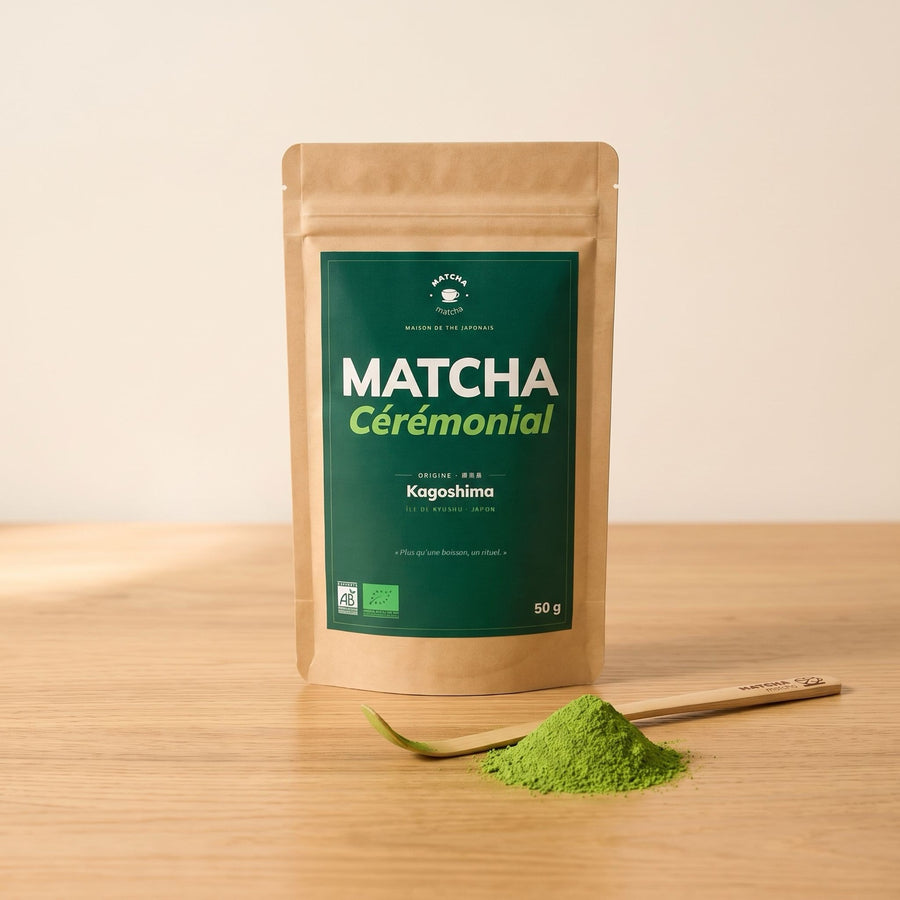
Sachet de Matcha Cérémonie Bio 50 g, matcha bio du Japon cultivé à Kagoshima, avec sa cuillère en bambou

Organic Ceremonial Matcha 50 g

29,90 €

Drink it on its own or as a latte. Ready in 20 seconds.

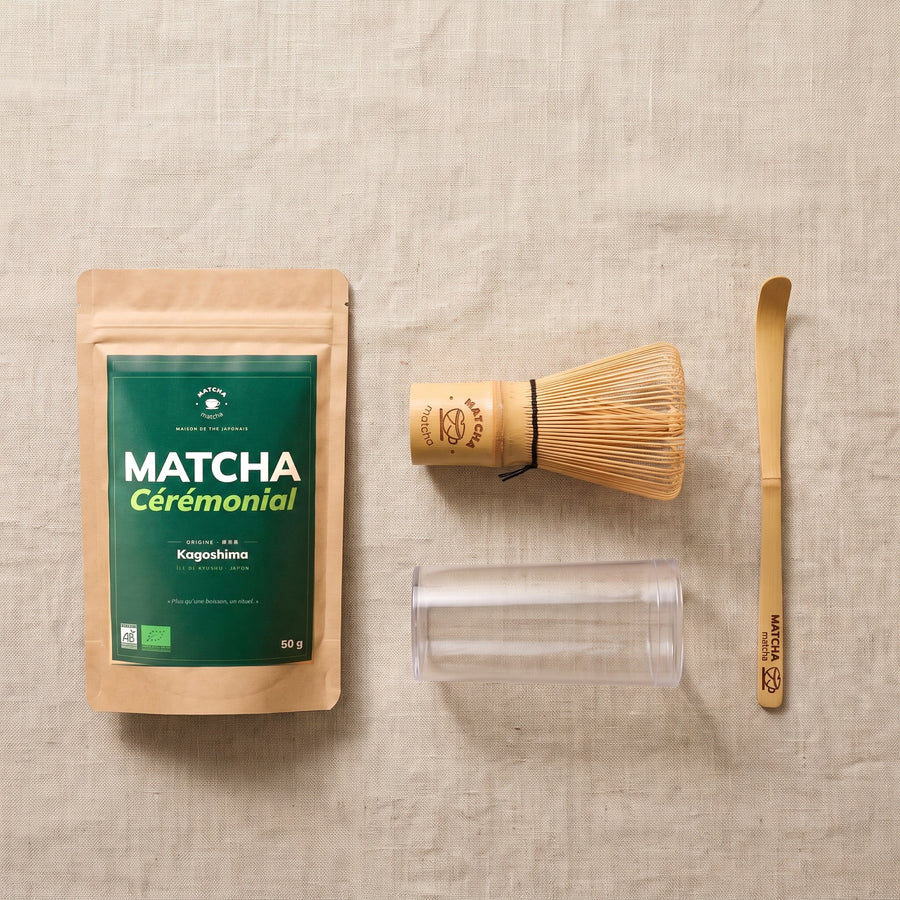
Kit matcha : sachet de 50 g de Matcha Cérémonie Bio, fouet à matcha en bambou (chasen) dans son tube et cuillère en bambou

Matcha Kit

44,90 € 49,70 €
-10%

The matcha, the whisk and the spoon. 9% cheaper.

See our matcha

Home › Our recipes › Starbucks-style matcha latte

Matcha latte recipe, Starbucks style

This matcha latte recipe, Starbucks style, fits in one sentence: whisk 2 g of matcha into 30 ml of water at 70 °C, sweeten it, then pour in 200 ml of frothed milk. It takes five minutes, works hot or iced, and you decide how much sugar goes in.

Une tasse verte de matcha latte à la mousse fine, posée sur une planche en bois

A recipe by the Matcha Matcha team, with no connection to the Starbucks chain. Updated in November 2026.

Ingredients

Ready in 5 min · no cooking

For1 glass
  • 2 gof Organic Ceremonial Matcha, which is one small teaspoon or 2 bamboo spoons
  • 30 mlof water at 70 °C
  • 2 tspof vanilla syrup or cane sugar syrup
  • 200 mlof whole milk, heated to 60-65 °C
  • 150 mlof whole milk, well chilled
  • Ice cubesenough to fill each glass
  • 165 kcalper glass, an estimate
  • 6 gof added sugar from the syrup, roughly
  • €1.20of matcha per glass

How to make this matcha latte, hot or iced, step by step

This matcha drink works if you keep to the order: the powder meets the water before it meets the milk. The quantities change with the number of glasses and the hot or iced option you chose above.

Sifting matcha into a small jug

1

Sift and add the water

Sift 2 g of matcha into a small jug, then pour in 30 ml of water at 70 °C: two thirds boiling water, one third cold water.

Whisking matcha in a W shape with a bamboo whisk

2

Whisk for 20 seconds

Whisk briskly in a W shape with the 100-prong bamboo whisk, until foam covers the surface.

Frothing milk with a milk frother
A matcha latte in a glass

3

Froth the milk

Prepare the glass

Heat 200 ml of milk to 60 or 65 °C without letting it boil, then froth it for 20 to 30 seconds with a milk frother.

Fill a tall glass with ice cubes, pour in the syrup, then 150 ml of cold milk.

Pouring matcha and milk into a glass

4

Put it together

Pour the syrup into a large mug, then the matcha. Add the milk while holding the foam back with a spoon, then spoon the foam on top.

Pour the matcha slowly over the ice. It stays on top: stir when you are ready to drink.

No whisk to hand? For a matcha latte without a whisk, a milk frother gives a decent base, with bigger bubbles. No frother either? For hot milk, a French press works well: pump the plunger about twenty times.

Adjust your glass: sugar and milk

Each button also changes the recipe at the top, so you keep it the way you like it. 2 g, which is one small teaspoon or 2 bamboo spoons: that is our dose for a latte. To taste more of the tea, use less milk.

Sugar

We start from 2 teaspoons: taste, then adjust one teaspoon at a time.

Milk

Whole milk gives the tightest foam and the roundest taste.

  • Matcha 2 g
  • Whole milk
  • Foam
  • Syrup

A smooth glass, quite sweet, hot.

Estimate: 165 kcal · about 6 g of added sugar · €1.20 of matcha

Which matcha should you choose for this latte?

Three matcha powders compared, from bright green to a duller green

A matcha that is smooth to drink on its own, bright green, and keeps its taste in milk.

Milk rounds the drink out, but it does not rescue a harsh powder. A matcha that is bitter in water stays bitter in a latte, and then it takes a lot of syrup to hide it. On pouches, "culinary" or "baking" means a powder meant for cooking, which is harsher in a drink. For this latte, pick a matcha made for drinking.

How much does this glass cost at home?

A matcha latte cost €5.88 on average in six cafés in Paris, Lyon and Bordeaux on 8 November 2026, compared with about €1.20 of matcha for a glass made at home.

€5.88In a café, on average: 6 cafés in Paris, Lyon and Bordeaux, Starbucks not included, prices noted on 8 November 2026.

€1.20The matcha alone in your glass at home, without milk or syrup, for 2 g from a €29.90 pouch.

Five of these six cafés charge 50 to 80 cents extra for a plant-based milk. At home there is no surcharge: you buy the milk you want, and you skip the queue. You also keep your own mug, so there is no cup to throw away. At €1.20 a litre, the milk adds 24 cents to the glass, and the syrup a few cents more. Your glass then comes to about €1.50. At five lattes a week for a year, you save about €1,100 compared with the café.

A 50 g pouch makes 25 glasses, which is five weeks at five lattes a week. At that pace, the monthly subscription, with no commitment, brings the pouch down to €26.91.

Our Organic Ceremonial Matcha comes from Kagoshima, Japan, from a first harvest. It stays smooth with milk: you can cut the syrup without the glass turning bitter.

  • OrganicKagoshima, Japan

    Organic Ceremonial Matcha

    Smooth from the first sip, even if you don't like green tea.

      29,90 € · about €1.20 a glass

    • Getting started

      Matcha Kit

      The matcha, the bamboo matcha whisk (chasen) and the matcha spoon to measure your 2 g.

        44,90 € · 9% cheaper than buying the three separately

      Starbucks matcha latte: what the chain serves in France

      As of 8 November 2026, the online menu of Starbucks France lists the Matcha Green Tea Latte, its iced version (Iced Matcha Green Tea Latte) and two seasonal recipes, Toffee Nut and Gingerbread.

      The product page describes the first as "matcha green tea mixed with milk", in three sizes: Tall, Grande and Venti. The iced version is the same drink poured over ice. For the milk, the menu offers cow's milk and several alternatives: oat, soya, almond and coconut. On the order page, a Grande is set by default to 3 measures of "Matcha tea powder". The simple syrup can be removed, and the chain also offers vanilla, caramel, hazelnut, almond and three sugar-free syrups. The page does not give the origin, grade or composition of the powder.

      Online menu and order page of starbucks.fr, read on 8 November 2026; they change with the seasons. Starbucks is a registered trademark of its owner. Matcha Matcha has no connection with this chain.

      We do not know the chain's recipe: this one is ours. It aims for what people expect from a big-chain latte: a large glass, plenty of milk, thick foam and sugar, at the dose you choose.

      What you can set in this recipe
      What you set at homeIn this recipe
      ServingHot or iced, with one button
      SizeA large mug of about 300 ml, or a tall glass for the iced version
      Matcha2 g of Organic Ceremonial Matcha, first harvest from Kagoshima
      MilkYour own: the recipe recalculates the calories
      SugarFrom zero to 3 teaspoons, to your taste

      Which milk gives a good foam?

      Whole milk and barista oat drink (what most people call oat milk) hold their foam best. Oat adds a cereal note that goes well with matcha.

      The word "barista" matters: on plant-based milks, it means a recipe made to froth. The taste of matcha comes through more with soya milk, which is more neutral. The calories are for 200 ml of milk, the volume in this hot glass.

      A cup of matcha with a fine foam, ready to drink

      Whole milk

      ●●●●●

      Round, the closest to a coffee latte

      about 131 kcal

      Barista oat milk

      ●●●●○

      Smooth, with a cereal note

      about 119 kcal

      Soya milk

      ●●●●○

      Neutral, lets the matcha come through

      about 79 kcal

      Plain almond milk

      ●●○○○

      Light, a little dry

      about 27 kcal

      Coconut milk

      ●●○○○

      Tropical, tastes sweeter

      about 40 kcal

      Estimated calories. Milk: averages from labels, plain unsweetened versions, noted on 27/10/2026. Homemade syrup: about 2.5 kcal per millilitre. Matcha: about 9 kcal for 2 g. The result changes with the products you use.

      Make it once

      Homemade vanilla syrup in 3 minutes

      Heat 100 g of sugar with 100 ml of water until it dissolves, add half a teaspoon of vanilla and leave to cool.

      It keeps for a week in the fridge, in a closed jar. This amount is enough for about fifteen glasses at 2 teaspoons each.

      To change the flavour

      • Vanilla or caramel. The syrup above, or one from a shop: vanilla, almond, caramel.
      • Spices. A pinch of cinnamon or nutmeg on the foam, just before serving.
      • Maple or honey. One teaspoon is enough, because their taste comes through more than sugar.
      • No sugar. A few drops of vanilla extract or a pinch of cinnamon. Stevia works too, added to taste. Oat milk already brings a little sweetness.
      • More protein. Use soya milk, or a milk with added protein.
      • The finishing touch. A light dusting of matcha over the foam, just before serving.

      The equipment, and what can replace it

      Hands whisking matcha with a bamboo whisk

      A wide cup, something to whisk with, something to froth with: you probably have half of it in your cupboards already.

      The bamboo matcha whisk (chasen)

      Its 100 prongs break up the powder and build a fine foam in 20 seconds. Without it, a milk frother or a small kitchen whisk will make a decent base, with bigger bubbles.

      The bamboo spoon (chashaku)

      Two spoons make the 2 g for this latte. Without it, use a small teaspoon.

      The milk frother

      Allow 20 to 30 seconds for hot milk. Without a frother, a French press works well: pump the plunger about twenty times.

      The sieve and the mug

      A small fine sieve is enough for sifting. Use a mug of about 300 ml for the hot version and a tall glass for the iced one.

      What goes wrong, and how to fix it

      Choose what you see in your glass: you will get the cause and the fix.

      Your latte is bitter

      Why
      The water was too hot, or the powder is too strong to drink with milk.
      The fix
      Stay at 70 °C: two thirds boiling water, one third cold water. Keep to 2 g. A matcha that is smooth to drink on its own stays pleasant in a latte; a matcha made for baking comes out harsher.

      There are still lumps

      Why
      The powder touched the milk before the water, or it was not sifted.
      The fix
      Sift, then whisk in water alone. In a hot latte that is already poured, the frother gets rid of some of them. For a cold one, it is better to start again with a new base: the powder no longer dissolves in iced milk.

      The milk does not froth

      Why
      It went above 65 °C, or the plant-based milk is not a barista version.
      The fix
      Heat it to 60 or 65 °C: you should still be able to hold the jug in your hand. Froth for 20 to 30 seconds with the head of the frother just under the surface.

      You cannot taste the matcha

      Why
      There is too much milk for the dose, or the opened pouch has lost its aroma.
      The fix
      Keep to 2 g and go down to 150 ml of milk. Once opened, a pouch of matcha keeps for 30 to 45 days if you close it well.

      The plant-based milk curdles

      Why
      A very hot base shocked the plant-based milk, often soya.
      The fix
      Check the temperatures: 70 °C for the water, 60 °C at most for the milk. Pour it gently down the side of the glass, onto the matcha.

      The layers of the iced latte mix

      Why
      The matcha dropped straight to the bottom of the glass.
      The fix
      Fill the glass with ice to the top, then pour the matcha slowly over the ice. It stays on top until you stir.

      Want to try another glass?

      With oat milk

      The plant-based latte with dense foam.

      With coconut milk

      Rounder, and worth trying over ice.

      Creamy

      The version with a thick texture.

      Iced matcha

      Iced, made with water and no milk.

      With strawberry

      Two layers and a taste of dessert.

      Frappé

      Blended with ice, as they do at the counter.

      Frequently asked questions

      How do you make a Starbucks-style matcha latte at home?

      Pour 2 teaspoons of syrup into a large mug, then 2 g of matcha whisked with 30 ml of water at 70 °C. Top up with 200 ml of milk heated to 60 or 65 °C and frothed. For the iced version, use 150 ml of cold milk and a glass filled with ice.

      Does Starbucks serve matcha?

      Yes. As of 8 November 2026, the French menu lists a hot matcha latte, an iced one and two seasonal recipes. The menu changes with the seasons.

      Which matcha does Starbucks use?

      Starbucks France refers to "Matcha tea powder", without giving its origin or its grade. In the United States, Chowhound describes a powder from Japan, unsweetened since January 2025. Nothing confirms that the French recipe is the same.

      How many calories are in a Starbucks matcha latte?

      We have no verifiable figure for the French menu, so we do not give one. Our hot version with whole milk and 2 teaspoons of syrup comes to about 165 kcal, an estimate. The figures for each milk are on our page about matcha latte calories.

      Can you order a less sweet matcha latte at Starbucks?

      Yes. The order page lets you remove the simple syrup, or choose a sugar-free vanilla, caramel or hazelnut syrup. It does not say whether the powder contains sugar. At home, you decide the amount, from zero to 3 teaspoons.

      How much does a matcha latte cost at Starbucks?

      Starbucks France does not show prices on its online menu, and they vary with the store and the size: we have no verifiable figure to give you. As a rough guide, in six other cafés in Paris, Lyon and Bordeaux, none of them a Starbucks, a matcha latte cost €5.88 on average on 8 November 2026. At home, the matcha comes to about €1.20 a glass, plus the milk and the syrup.

      How much syrup do you need for a really sweet taste?

      Start with 2 teaspoons per glass, then adjust between 1 and 3 to your taste. Pour the syrup into the glass before the milk: it mixes in better.

      Which milk should you choose for barista foam?

      Whole milk gives the richest texture. Among plant-based milks, take a barista oat milk for dense foam, or soya milk if you want a neutral taste.

      How do you make a Starbucks-style iced matcha latte?

      Whisk the matcha with the hot water and fill a glass with ice. Pour in the syrup and 150 ml of cold milk, then the matcha over the top, slowly: it stays on the surface and the glass keeps its two layers.

      Can you cut the sugar and still keep it a treat?

      Yes. Reduce the syrup one teaspoon at a time and keep a naturally sweet milk, such as oat. A little vanilla or cinnamon makes it taste sweeter.

      How much matcha per glass?

      2 g, which is one small teaspoon or 2 bamboo spoons, for one latte. If the taste seems too weak, keep this dose and pour 150 ml of milk instead of 200.

      How is it different from a classic matcha latte?

      The café style is sweeter, bigger and frothier. A classic matcha latte is made with 150 ml of milk and little or no syrup, so you taste more of the tea. Our page on how to make a matcha latte covers it in detail.

      What is the difference between matcha and a matcha latte?

      Matcha is the green tea powder, which you drink whisked into water: 1 g for a cup. A matcha latte adds milk, with 2 g of powder so the taste still comes through.

      Can you use a shaker or a milk frother?

      Yes. The frother works for the matcha base as well as for hot milk. The shaker works well for the iced version: shake the matcha with a splash of cold water and the cold milk. Never put anything hot in it, as it could spray out when you open it.

      Can you make it ahead?

      It is better to drink it straight away: within a few minutes the foam drops and the powder settles at the bottom. The syrup is different. You can make it ahead and it keeps for a week in the fridge.

      Is this recipe suitable for vegans?

      Yes, with a plant-based milk instead of cow's milk, and a sugar syrup or maple syrup. Leave out honey in that case.

      Why do some matchas taste bad?

      Water that is too hot, too large a dose or a powder meant for baking gives a harsh, grassy taste. The taste depends a lot on the powder: the checklist on our page about where to buy the best matcha powder helps you choose.

      Does a matcha latte contain caffeine?

      Yes, the caffeine in the matcha: about 38 to 89 mg for 2 g of powder, depending on the powder. Count it with your other drinks of the day. Starbucks France does not publish this figure on its product page.

      Can you drink a matcha latte every day?

      Yes, as long as you count what is in it. With 2 teaspoons of syrup, this glass has about 6 g of added sugar, and the caffeine from 2 g of matcha. EFSA considers that up to 400 mg of caffeine a day raises no safety concern for a healthy adult, and sets 200 mg at most during pregnancy: count this glass with your other drinks. Like all matcha, it also contains aluminium: our page on the side effects of matcha covers it. If you are pregnant, on medication, or making it for a child, ask your doctor.

      Which water should you use for matcha?

      Filtered or low-mineral water lets the taste of matcha come through more clearly. If your tap water smells of chlorine, filter it before you heat it.

      Source: Kochman J. et al., "Health Benefits and Chemical Composition of Matcha Green Tea: A Review", Molecules, 2021, 26(1), 85, for the caffeine in matcha.

      For your next glass

      • OrganicKagoshima, Japan

        Organic Ceremonial Matcha

        Smooth from the first sip, even if you don't like green tea.

          29,90 € · about €1.20 a glass

        • Getting started

          Matcha Kit

          The matcha, the bamboo matcha whisk (chasen) and the matcha spoon to measure your 2 g.

            44,90 € · 9% cheaper than buying the three separately

          Read next

          A matcha latte in a cup

          As a latte

          Doses, milks, iced, without a whisk: the full basics.

          Hands preparing matcha with a bamboo whisk

          With a whisk

          The cup made with water, one step at a time.

          Three matcha powders compared, from bright green to a duller green

          Buying well

          The checklist to go through before you pay.

          Tea plants shaded under cloths before the matcha harvest

          The guide

          Origin, production, taste and caffeine.

          Professionals

          Do you serve matcha?

          Serve a smooth matcha that your customers like from the first cup. Organic Ceremonial Matcha in bulk from 1 kg, or under your own brand. Prices and documents are in our trade area, which is open only to cafés, restaurants and retailers.