Matcha and Exercise: Why Matcha Is the Ideal Drink for Athletes
By the Matcha Matcha team
Contents 6 portions
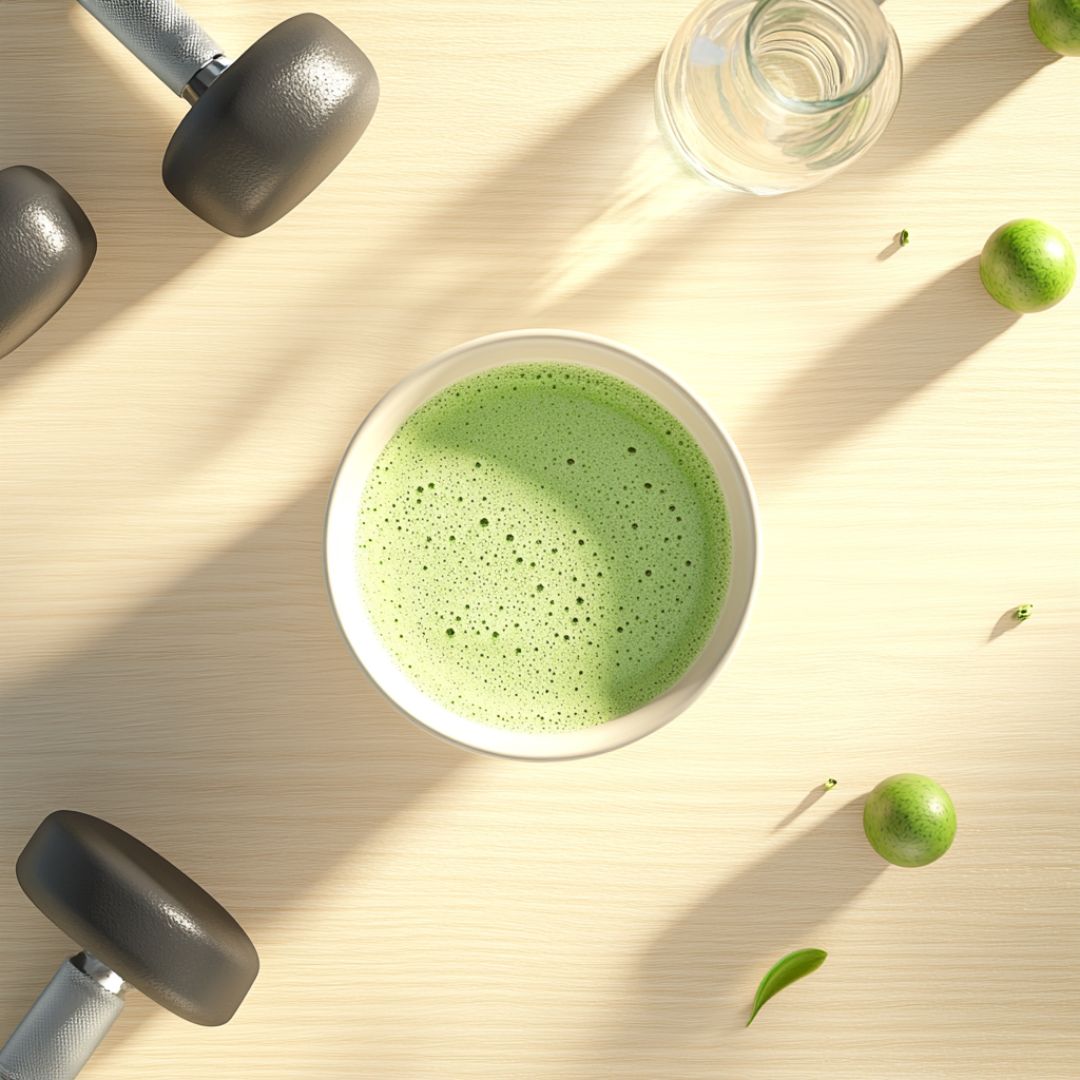
Matcha is known as far more than “just a tea”: it’s a concentrated source of nutrients, gentle stimulants, and antioxidants. Discover why it’s such a smart choice for athletes who want to support performance and speed up recovery.
Matcha: a natural endurance booster
Reading time: 7 minutes
1. Caffeine & L-theanine synergy
Matcha naturally combines caffeine and L-theanine, delivering steady, long-lasting energy. Caffeine stimulates the nervous system, while L-theanine helps smooth its effects to limit jitters and the infamous “crash”. The result: calm focus—ideal for longer training sessions.
2. Improved fat oxidation
Matcha’s catechins support lipolysis—using fat as fuel during exercise. This can be especially helpful for endurance sports, by helping preserve glycogen stores and delaying fatigue.
Comparative overview
| Parameter | Without matcha | With matcha |
|---|---|---|
| Exercise duration | 60 min | 75 min (+25%) |
| Fat oxidation | Moderate | High (+15%) |

Matcha for faster recovery
1. Anti-inflammatory properties
After intense exercise, catechins—especially EGCG—help reduce oxidative stress and muscle inflammation. Drinking matcha post-workout may help ease soreness and prepare your body for the next session.
2. Support for lactate clearance
Matcha may support the body’s ability to clear lactic acid, often associated with cramps and heavy legs. Less lactate can mean a smoother recovery and reduced discomfort in the 24–48 hours after training.
Scientific studies & athlete feedback
Literature insights
Some clinical research suggests that matcha (and green tea compounds) consumed before training may support endurance and reduce markers of post-exercise inflammation. These findings highlight the role of antioxidants and L-theanine for athletes looking for a clean, balanced boost.
Athlete testimonials
“Matcha helped me go longer without tingling or an energy drop,” says Camille, an amateur triathlete. “My recovery feels faster—I’m back to training with less soreness,” adds Marc, a long-distance runner.
Sport-friendly variations & recipes
Pre-workout matcha
Mix 2 g of matcha with 150 ml of warm water, then add a splash of lemon juice to support catechin absorption.
Post-workout smoothie
Blend banana, plant-based milk, 1 g of matcha, and a handful of spinach for a nutrient-dense boost of vitamins and antioxidants.
Homemade energy bars
Add 1 g of matcha to a mix of oats, honey, almonds, and protein powder, then chill before slicing.
Practical tips
- Sift the powder to prevent lumps.
- Hydrate well before and after your matcha.
- Adjust the dose (1–2 g) depending on training intensity.
Why choose our Organic Ceremonial Matcha?
Choose an organic matcha, carefully produced in Japan (Kagoshima), with no pesticides or additives. High-grade matcha helps deliver an optimal balance of catechins and L-theanine—so you get a clean boost, without compromising on taste.